
Lead Generation as a Service: How It Works, What It Costs, and When to Buy It
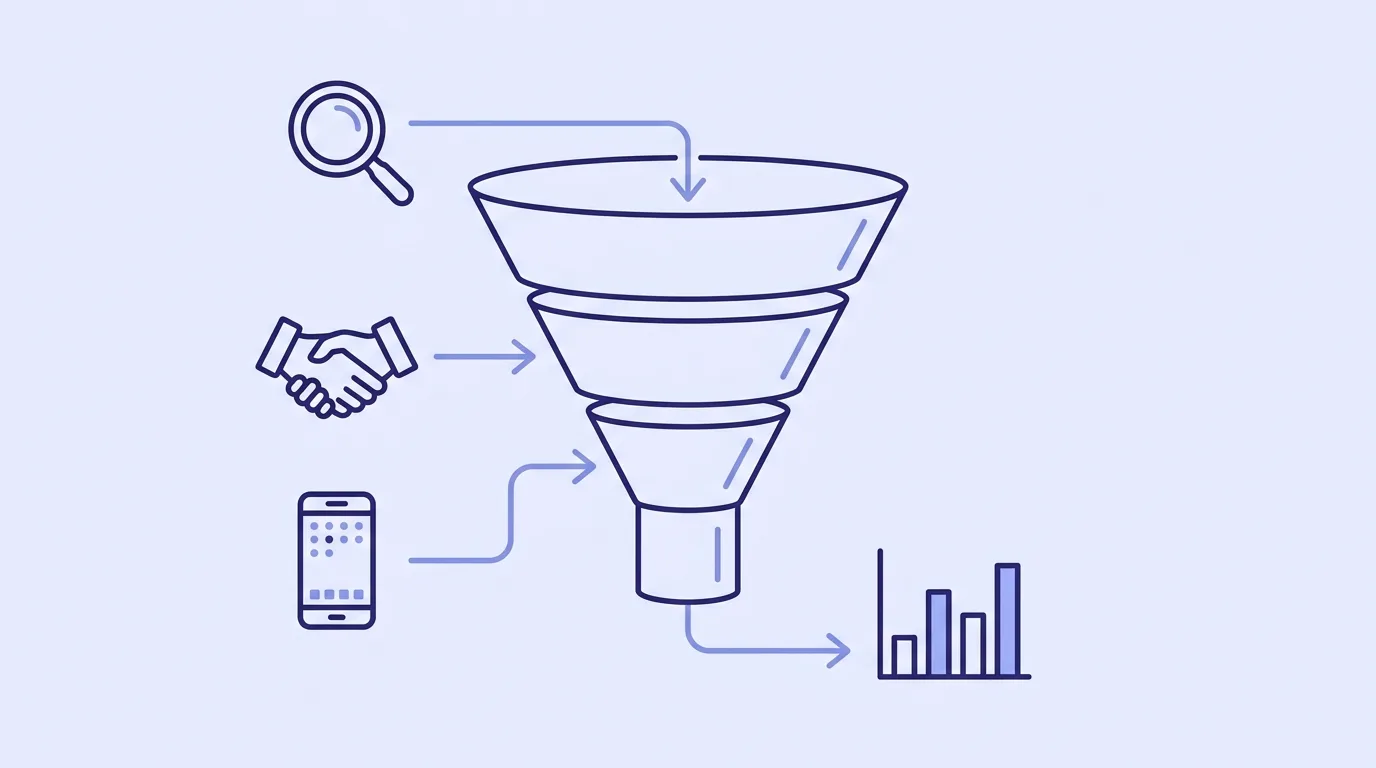
Lead generation as a service is a model where you pay a specialist provider to build, run, and optimise the campaigns that bring enquiries to your business. For most New Zealand service businesses, the all-in monthly investment sits between $2,000 and $6,000 depending on ad spend and scope. You focus on quoting, closing, and delivering; the provider handles everything that happens before a prospect picks up the phone or fills out a form.
That sounds simple. In practice, the quality gap between providers is enormous, and plenty of businesses have paid good money for a model that did not deliver. This guide cuts through the confusion: what the model actually includes, what you should be paying, and the signals that tell you whether it is the right fit for where your business is right now.
What the Model Actually Includes
The phrase “lead generation as a service” covers a wide spectrum. At the thin end, some providers simply hand over a spreadsheet of cold contact data and call it lead generation. That is not a service, it is a list.
A genuine lead generation service is an active, managed system. At minimum it should include:
Campaign setup and ongoing management. This means building and running paid campaigns across the right channels for your audience, most commonly Google Search Ads, Meta, or both. The provider handles the account structure, bidding strategy, keyword selection, audience targeting, and daily monitoring. You should not need to log into any ad platform yourself.
Landing pages built to convert. Traffic sent to a generic homepage loses most of its value. A proper service includes dedicated landing pages designed around the prospect’s intent, with clear calls to action and minimal friction. Good providers A/B test these continuously.
Ad creative and copywriting. This includes the ads themselves: headlines, descriptions, images, and video where relevant. The provider should be producing and rotating creative, not running the same ad unchanged for months.
Lead capture and notification. Enquiries need to reach you fast. A well-set-up service routes leads to your phone, email, or CRM in real time, with full contact details and context about what the prospect searched for or clicked on.
Reporting you can actually read. Monthly reports that show leads delivered, cost per lead, conversion rates by channel, and honest commentary on what is working and what is being changed. Not vanity metrics like impressions.
Some providers also include CRM setup, follow-up automation, and lead qualification calls. These are worth paying for if you do not already have those systems in place.
Is Lead Generation the Same as Hiring a VA?
This question comes up often, and the short answer is no.
A virtual assistant handles tasks. They can update a CRM, send follow-up emails from a template, or book appointments. A skilled VA is useful, but they are executing within a system that someone else designed and funded.
Lead generation as a service is the system itself. The provider is responsible for building the funnel, funding and managing the ad campaigns, writing the creative, testing the landing pages, and delivering enquiries. A VA cannot run a $3,000-a-month Google Ads account without the training, platform access, and strategic context that a specialist brings.
Some businesses try to hire a VA to handle their Google Ads. This is almost always a false economy. Google Ads rewards deep expertise and continuous optimisation. An untrained operator running campaigns can burn through budget fast with little to show for it.
Where a VA genuinely complements lead generation as a service is on the follow-up side. Once enquiries arrive, a VA can help with speed of response, booking calls, and keeping your CRM clean. But that is downstream of what the service itself provides.
If your team is small and you want to outsource your entire growth engine rather than piece it together, lead generation as a service is the more complete answer. If you already have strong campaigns running and just need execution support, a VA might be the gap-filler.
What You Should Pay
Pricing in this category has two components: the management fee and the ad spend. Conflating them is a common source of confusion.
Management fees in New Zealand typically run from $1,200 to $3,500 per month for a service-based business running one or two channels. Higher fees reflect more campaigns, more creative production, more complex funnels, or a provider who employs senior specialists rather than juniors. A fee below $1,000 a month usually means you are getting a templated, low-touch service.
Ad spend is separate and goes directly to Google, Meta, or whichever platform is running your campaigns. For most service businesses starting out, a realistic minimum is $1,500 to $2,500 per month to generate meaningful data and a consistent lead volume. Below that, the sample sizes are too small to optimise properly.
Cost per lead varies substantially by industry. Based on what we see across NZ service businesses:
- Plumbers and electricians: $40 to $120 per lead on Google Search
- Residential builders and renovation contractors: $80 to $200 per lead
- Physiotherapy and allied health clinics: $30 to $90 per lead
- Law firms and family lawyers: $120 to $350 per lead
- Cosmetic and aesthetics clinics: $60 to $180 per lead
These numbers shift based on geography, competition, and campaign quality. Auckland campaigns typically cost more per click than the same campaign in Hamilton or Christchurch, but the jobs are often worth more too. A plumbing job in Auckland’s North Shore averages $600 to $1,500, so a $90 lead that converts at 30% to 40% is straightforwardly profitable.
Watch out for providers who quote a flat cost-per-lead guarantee before seeing your market. That usually means shared leads, which brings its own problems.
The 5-Minute Rule and Why It Changes Everything
One of the most searched questions about lead generation is what the 5-minute rule means. Here it is plainly: research from InsideSales.com found that responding to a new lead within 5 minutes makes you 100 times more likely to connect with that prospect than if you wait 30 minutes. Wait an hour and the odds drop to almost nothing.
This is not about being pushy. It is about timing. When someone submits a form or clicks to call, they are in buying mode right now. They are probably contacting two or three businesses simultaneously. The first business to respond, speak like a human, and ask the right questions usually wins the job.
For most service businesses, this is where lead generation as a service falls down in practice. The provider delivers the lead perfectly, but the business takes three hours to respond because they are on the tools. The lead has already booked someone else.
The fix is simple in theory but requires discipline. Build a response process before you start spending on leads. Even a basic setup, an auto-response SMS within 30 seconds and a personal call within 5 minutes during business hours, will outperform most competitors. We have written a detailed guide on this at how to qualify leads in under 5 minutes without losing sales and the broader case is covered in speed to lead and why the first 5 minutes determines your conversion rate.
If you cannot guarantee fast response right now, fix that before you invest in lead generation. Good leads wasted on slow follow-up is the most expensive mistake in this space.
When the Model Makes Sense
Lead generation as a service delivers the most value in a specific set of circumstances. Understanding where it fits saves you from buying it at the wrong stage.
You have a proven offer and can close
If someone calls you and you can convert a reasonable percentage of qualified enquiries into paying work, lead generation as a service gives you a repeatable way to scale that engine. A plumber who closes 4 in every 10 calls and earns $900 average job value can build a clear return on investment from a $3,000 monthly service investment.
If your close rate is very low or you are not sure why, more leads will not solve the problem. Fix the sales process first.
Your job values justify the cost
Lead generation as a service makes mathematical sense when your average job or contract value is high enough to absorb the cost per lead. An Auckland electrician charging $250 for a fault-finding callout and $3,500 for a switchboard replacement has headroom to pay $80 to $120 per lead and still come out well ahead.
A business with $150 average transaction values and thin margins will struggle to make the numbers work on paid lead generation unless the lifetime value picture is strong.
You want consistent volume, not peaks and troughs
The seasonal feast-or-famine cycle hurts a lot of service businesses. Referrals are unpredictable. Lead generation as a service, done well, delivers a steady and adjustable flow of enquiries month to month. If January is quiet and February is slammed, a good provider can scale spend up or down accordingly.
You have tried DIY and hit the ceiling
Some business owners manage their own Google Ads campaigns well enough to get started, then find that performance plateaus. They do not have the time or expertise to troubleshoot quality score issues, restructure campaigns, or test landing pages properly. That is often the right time to bring in a specialist.
For a clear comparison of what DIY looks like versus outsourcing, see DIY vs agency lead generation: which is right for your business.
What to Watch Out For
Not all providers in this space operate the same way. These are the issues that most commonly cause problems.
Shared leads. Some providers sell the same lead to multiple businesses simultaneously. You pay for an enquiry and discover two other plumbers got the same one at the same moment. This drives down conversion rates and increases the pressure to respond in seconds. Always confirm whether your leads are exclusive.
Lead ownership and data. When you stop working with a provider, do you keep the ad accounts, the landing pages, and the lead data? Or does everything disappear? Insist on owning your Google Ads account and having admin access throughout the engagement.
Lock-in contracts. Reputable providers do not need to trap you in 12-month contracts. A confident agency earns your business month after month. If a provider insists on a long minimum term before you have seen any results, that is a red flag.
Lead quality vs lead volume. A service that delivers 50 leads a month at $30 each sounds better than 15 leads at $90 each. But if those 50 leads are low-intent tyre-kickers who never answer the phone, the actual return is worse. Push for reporting on lead-to-appointment or lead-to-quote rates, not just volume.
No landing pages included. Sending paid traffic to your homepage is one of the most common waste points in digital advertising. If a provider is managing your campaigns but not your landing pages, ask them why, and whether that gap is costing you conversions.
Before you commit to any provider, the questions in what to ask before hiring a lead generation company are worth working through in full.
Is It Right for Your Business Right Now?
The honest answer depends on where you sit.
If you are a trade, professional services, or healthcare business in New Zealand with average job values above $400, a team that can handle enquiries promptly, and a monthly budget for management fees plus ad spend of at least $3,000 combined, lead generation as a service is worth a serious look. The model is proven for these business types when it is set up properly.
If you are earlier stage, still refining your offer, or not yet set up to respond to leads within minutes, build those foundations first. The service will cost the same but deliver far less until those things are in place.
The right provider will tell you honestly if you are not ready yet. If a provider promises results without asking about your sales process, your response time, or your target customer, be cautious.
Ready to find out whether it makes sense for your business? Book a strategy call with Lucid Leads and we will give you a straight answer based on your numbers, not a sales pitch.
Frequently Asked Questions
What is lead generation as a service? It is a managed service where a specialist provider runs paid advertising campaigns, builds landing pages, and delivers qualified enquiries to your business on an ongoing basis. You pay a management fee plus ad spend; the provider handles everything that generates the lead.
How much should you pay for lead generation? For New Zealand service businesses, expect to pay $1,200 to $3,500 per month in management fees, plus $1,500 to $2,500 or more in ad spend. Cost per lead varies by industry, from around $40 for trade services to $350 for high-value professional services. The right number depends on your average job value and conversion rate.
Is lead generation the same as hiring a virtual assistant? No. A VA executes tasks within an existing system. Lead generation as a service is the system itself, including campaign strategy, ad management, creative, and landing pages. A VA can support lead follow-up but cannot replace a specialist managing live ad spend.
What is the 5-minute rule for leads? Responding to a new enquiry within 5 minutes dramatically increases your chance of connecting and converting that prospect. Waiting 30 minutes or more means most leads have already moved on to a competitor. Fast response is just as important as the quality of the lead itself.
What should I watch out for when buying this type of service? The main risks are shared leads sold to multiple businesses at once, not owning your ad accounts, long lock-in contracts before results are proven, and providers who optimise for lead volume rather than lead quality. Ask for exclusivity, admin access to all accounts, and reporting that connects leads to actual revenue.
Ready to Generate More Leads?
Let's discuss how we can help you get 30 qualified leads in 30 days with our proven TAP System.
Book a Free Strategy CallRelated Articles
Continue learning about lead generation and paid advertising

Real Estate Lead Generation: How It Works and What You Should Pay
A practical guide to real estate lead generation: how the funnel works, what a qualified lead is worth, and how to choose the right channel for your market.

Lead Gen News: July 2026 - Google's Journey Bidding, New Lead Dashboard, and Meta's AI Creative Push
The latest in lead generation: Google's journey-aware bidding, new lead dashboard, Local Services Ads changes, DSA retirement, and Meta's AI creative push.
Written by

Founder & Lead Generation Specialist
Jason Poonia is the founder of Lucid Leads, helping service businesses across New Zealand generate qualified leads through paid advertising and conversion-focused funnels. With a background in Computer Science from the University of Auckland and over 5 years of experience running lead generation campaigns, Jason has helped businesses in construction, trades, real estate, and professional services generate thousands of qualified leads. His data-driven approach combines targeted ad strategies with rapid lead qualification to deliver prospects who are ready to buy.