
Lead Generation for Multi-Location & Franchise Businesses NZ
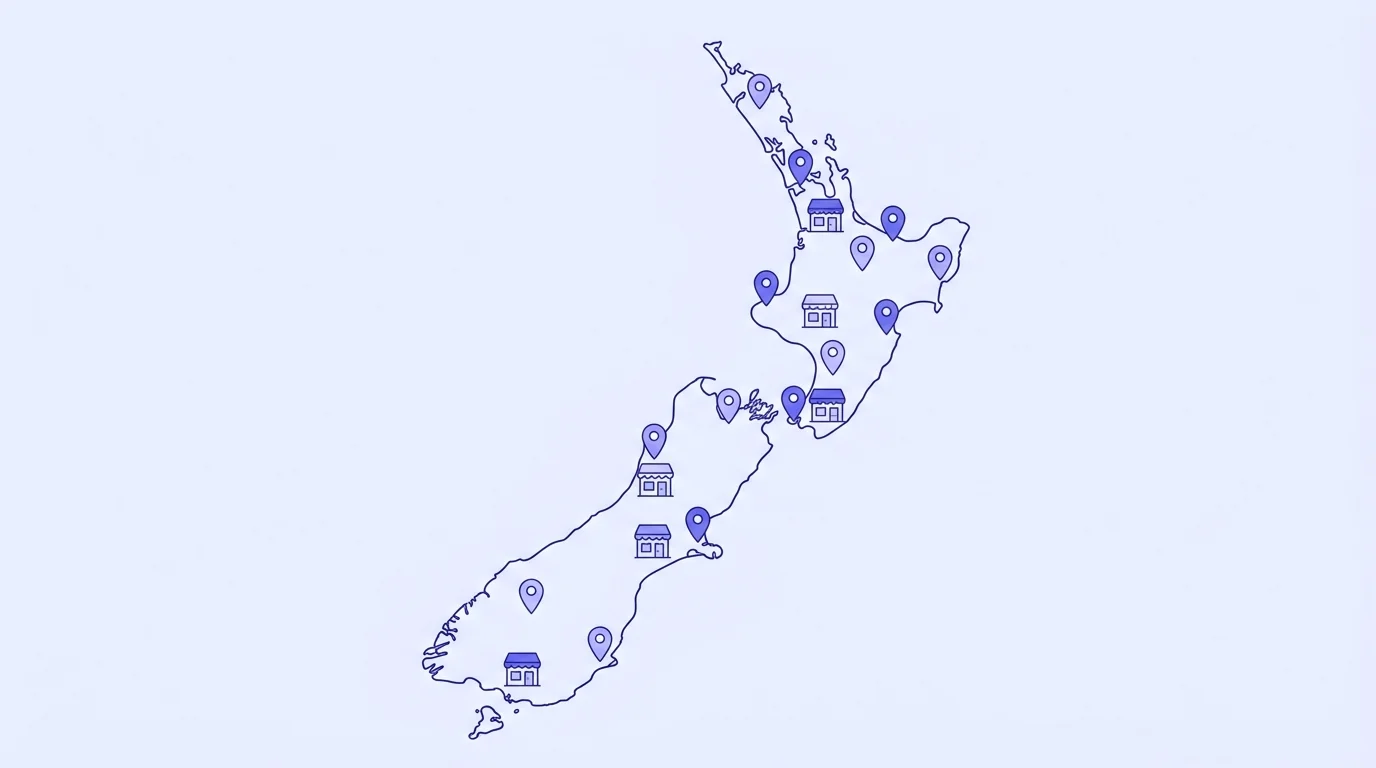
Lead generation for a multi-location or franchise business is a different discipline to running a single shopfront. When you operate across several branches in New Zealand, you are balancing two things that pull in opposite directions. You need one consistent brand that customers trust no matter where they find you, and you need every campaign, page, and ad to feel genuinely local to the suburb or city it is targeting. On top of that, every enquiry has to land with the right branch fast, because a lead routed to a team three regions away is a lead lost. Get those three things working together (one brand, local relevance, and accurate routing) and a multi-location operation can generate leads far more efficiently than a single-site competitor ever could.
This guide walks through how lead generation differs for businesses with multiple branches or a franchise network, and how to build a system that scales across every location you serve.
Why Multi-Location Lead Generation Is Different
A single-location business optimises for one market. A multi-location business has to win in many markets at once, each with its own competitors, search demand, and customer expectations. What works in central Auckland will not automatically work in Invercargill, and a campaign that performs in Hamilton might quietly waste budget in Tauranga.
The whole discipline comes down to managing a few core tensions:
- Brand consistency versus local relevance: Customers need to recognise you everywhere, but they also want to feel you are part of their community.
- Central control versus local autonomy: Someone has to own the system, but local managers know their market.
- One budget versus many opportunities: Spend has to be split across locations that rarely have equal demand or equal margin.
- Speed of routing: Every lead must reach the nearest or most relevant branch before a competitor responds.
The tactics that follow all exist to manage one or more of these.
Campaign Structure by Location
The single most important decision in a multi-location account is how you structure your campaigns. Lumping every branch into one campaign makes it impossible to see which locations perform, to control spend by market, or to tailor messaging.
Build Around Locations, Not Just Services
For most networks, the cleanest structure separates campaigns by location first, then by service within each location. A regional plumbing franchise, for example, might run:
- Auckland campaign: ad groups for emergency callouts, hot water, and drainage
- Wellington campaign: the same service ad groups, with Wellington-specific messaging and budget
- Christchurch campaign: the same again, tuned to local demand
This structure gives you a clear view of cost and conversions per branch, the ability to pause or scale individual markets, and room to adapt ad copy and offers to each region. It is the foundation that makes everything else in this guide possible, and it is a core part of how we approach paid ads for multi-location clients.
When to Centralise and When to Separate
Smaller networks of two or three branches can sometimes manage with a single well-segmented campaign. Once you reach four or more locations, or once branches start competing for the same keywords, separate campaigns become essential. Separation prevents your own locations from bidding against each other and gives you per-branch reporting that actually means something.
Accurate Geo-Targeting for Every Branch
Geo-targeting is where multi-location campaigns most often leak money. The default settings in most ad platforms are generous to a fault, and they will happily show your Dunedin ad to someone searching from Auckland.
Target the Right Radius for Each Location
Service-area businesses (trades, mobile services, home services) should target a realistic travel radius around each branch, set per location rather than as one blanket radius. A dense urban branch might serve a tight radius while a rural branch covers a much wider region.
For businesses with premises customers visit (clinics, gyms, showrooms, restaurants), target the suburbs and towns within a reasonable drive of each site, and exclude areas served better by another branch.
Avoid Branches Cannibalising Each Other
When two branches are close together, their targeting will overlap unless you draw clear boundaries. Decide which branch owns which suburbs, then build exclusions so each campaign respects those lines. This stops you paying twice for the same customer and keeps your per-branch reporting honest.
Check Your Location Intent Settings
Most platforms let you choose between targeting people physically in an area and people merely interested in it. For local lead generation, you almost always want people in or regularly in the area. We cover the finer points in our guide to advanced location targeting in Google Ads, which is worth reading alongside this article if you run Google campaigns across several regions.
Dedicated Location Landing Pages
Sending every location’s traffic to a single generic homepage is one of the most common and most expensive mistakes a multi-location business makes. If your Tauranga ad promises local service and the page that loads talks about your whole national network, you have broken the promise and you will lose the conversion.
One Page Per Location
Each branch deserves its own landing page built around that market. A strong location page includes:
- The location in the headline and throughout the copy, so the page matches the searcher’s intent
- The local branch address, phone number, and service area
- Photos, reviews, and case studies from that specific market where possible
- A clear call to action that routes the enquiry to the correct branch
This message match between ad and page lifts conversion rates and improves your ad relevance, which can lower your costs.
Building Location Pages at Scale
The obvious objection is effort. Building dozens of pages by hand is slow and inconsistent. This is exactly the work that can be built at scale using templated page systems, where one well-designed template populates location-specific content (suburb names, local proof, branch details, and service variations) across every market automatically. You get consistent, on-brand structure with genuinely local content on every page, without building each one by hand. This is how we help networks stand up location pages for ten, twenty, or fifty branches without the build collapsing under its own weight.
Local Keywords and Search Intent
The keywords that drive leads for a multi-location business are almost always local. People rarely search for a brand they do not yet know. They search for the service plus where they are.
Map Keywords to Each Market
Build your keyword sets around the pattern [service] + [location] for every branch:
- “[service] Auckland”, “[service] North Shore”, “[service] Botany”
- “[service] near me” (which the platform resolves to the searcher’s location)
- “[service] [suburb]” for the suburbs each branch owns
The right level of granularity depends on search volume. Big cities justify suburb-level keywords, while smaller regions are better targeted at the town or city level. Match the keyword detail to the demand in each market rather than copying one approach everywhere. The terms customers use also vary by region, so reviewing the actual search terms triggering your ads, market by market, lets you refine each branch’s keywords to match how its customers really search.
Budget Allocation Across Locations
Splitting budget evenly across branches feels fair, but it rarely produces the best results. Demand, competition, and margin differ from market to market, and your spend should follow the opportunity.
Match Spend to Opportunity, Not Headcount
A branch in a high-demand, high-margin market can usually absorb more budget profitably than a quieter branch. Look at each location’s search volume, conversion rate, average job or sale value, and capacity to handle work. A branch with strong demand and room to take more customers deserves a larger share. A branch that is already at capacity does not need its spend pushed harder.
Watch Cost and Return Per Branch
Because cost per lead varies so much between markets, network-wide averages can hide problems. Imagine, purely as an illustration, that one branch generates leads at a cost that converts comfortably into profitable jobs, while another spends the same to produce leads that rarely close. The network average looks acceptable while one branch quietly loses money. Per-branch reporting is the only way to catch this, which is why we treat it as non-negotiable.
Reallocate as Markets Move
Budgets should not be set once and forgotten. Seasonality, local competition, and branch capacity all shift through the year. Reviewing allocation regularly and moving spend toward the branches producing the best return keeps the network efficient. A new branch finding its feet might need a temporary boost, while a saturated market might be scaled back.
Routing and Qualifying Leads to the Right Branch
Generating a lead is only half the job. For a multi-location business, the lead then has to reach the correct branch, be qualified, and be responded to quickly. A brilliant campaign feeding leads into a slow or messy routing process is wasted spend.
Route Automatically and Instantly
Leads should be directed to the right branch based on the customer’s location or the page they enquired through, with no manual sorting. The branch that owns that customer’s area should be notified immediately so they can respond while the lead is still warm. The longer a lead sits unrouted, the colder it gets and the more likely a competitor wins it. Connecting your forms, ads, and CRM so this happens automatically is a funnel building problem as much as a lead generation one, and the two have to be designed together.
Qualify Before the Branch Spends Time on It
Not every enquiry is worth a branch manager’s time. Qualifying leads quickly (confirming the customer is in the service area, needs a service you offer, and is genuinely ready to proceed) means each branch only works the enquiries worth pursuing. Our lead qualification approach screens and verifies leads within minutes, so by the time a lead reaches a branch it is already sorted and ready for a real conversation. Across a network that consistency matters even more, because it stops strong branches being dragged down by poor-fit enquiries.
Make Speed of Response a Network Standard
Response time is one of the biggest predictors of whether a lead converts, and it is the part most likely to vary between branches. One might respond in minutes while another takes a day. Setting a network-wide response standard, and tracking it per branch, turns speed from individual habit into a system everyone follows.
Keeping the Brand Consistent While Staying Local
The whole point of a franchise or multi-location brand is recognition. Customers should get the same quality and the same promise whether they deal with your Hamilton branch or your Nelson one. At the same time, marketing that feels distant and corporate loses to a competitor who feels like a neighbour.
Centralise the Brand, Localise the Detail
The solution is to hold the brand elements constant while letting local detail vary. Keep your logo, colours, core messaging, value proposition, and quality standards identical across every location. Let the local layer (branch name, suburb references, local reviews, regional offers, and team photos) change market by market. Templated landing pages and structured campaigns make this practical, because the brand framework is built once and the local content slots in.
Give Local Teams the Right Guardrails
Local managers know their market and often want input into messaging or offers. Rather than locking them out or letting them go fully off-brand, give them clear guardrails: approved templates, an offer framework, and brand rules they work within. This keeps the network coherent while still benefiting from local knowledge.
Per-Location Reporting
If you cannot see how each branch is performing, you cannot manage the network. Aggregate numbers are comforting and almost useless for decisions, because the branch dragging down the average stays invisible until you break the data out.
Report on Every Branch Separately
Useful per-location reporting tracks, for each branch:
- Leads generated and the channels producing them
- Cost per lead in that specific market
- Lead-to-customer conversion rate and average value
- Response time to new enquiries
- Return on ad spend for the location
With this view you can see at a glance which branches to scale, which need attention, and which markets are simply harder. It also makes the case for budget decisions obvious rather than political.
Roll Up for the Network, Drill Down for the Branch
Franchisors and head office need the network view to understand overall performance, while each branch needs its own numbers to improve. Good reporting does both, and it is the data that keeps franchisor and franchisee conversations grounded in facts rather than opinions.
Franchisor and Franchisee Responsibilities
Franchise networks add a layer that pure multi-location businesses do not have: the question of who does what. Lead generation only works smoothly when the line between franchisor and franchisee is clear.
What the Franchisor Usually Owns
The franchisor is best placed to own the things that benefit from consistency and scale: the brand, the campaign structure, the landing page templates, the lead routing system, the reporting framework, and often a share of the media budget or a national campaign. Centralising these prevents every franchisee from reinventing the wheel and protects the brand.
What the Franchisee Usually Owns
The franchisee owns what depends on local presence and local execution: responding to leads fast, qualifying and converting them, local reviews and reputation, and often a local budget contribution and local market knowledge. The franchisee is closest to the customer, so the parts of the system that touch the customer directly tend to sit with them.
Agree the Split Before You Scale
Most friction in franchise marketing comes from an unclear split: leads nobody routes, budget nobody agrees on, or branches doing their own thing and diluting the brand. Agreeing who owns what, and building a system that reflects it, removes most of that friction before it starts. A well-designed multi-channel lead generation strategy makes the division of responsibility explicit, so every party knows their role across every channel.
How Lucid Leads Helps Multi-Location Businesses
Standing up lead generation across a network of branches is a significant build. It needs the right campaign structure, accurate geo-targeting per location, location pages at scale, budget tuned to each market, fast and reliable lead routing, and reporting that shows the truth branch by branch. Most multi-location businesses do not have the time or in-house specialism to assemble all of that and keep it running.
At Lucid Leads, we build and run lead generation systems for multi-location and franchise businesses across New Zealand. We structure campaigns by location, target each branch accurately, build location landing pages at scale, allocate budget to where the opportunity is, and route and qualify every lead to the right branch fast, all under one consistent brand with per-location reporting you can actually act on. With our 30 leads in 30 days guarantee, the system is built to produce results from the start, not in six months.
Book a free strategy call today to map out how lead generation can work across your branches and which markets to scale first.
Frequently Asked Questions
Should each branch have its own campaign or share one?
For networks of four or more locations, or any branches competing for the same keywords, separate campaigns per location are best. They give you per-branch budget control, cleaner reporting, and the ability to scale or pause individual markets. Two or three branches can sometimes share a single well-segmented campaign, but most growing networks outgrow that quickly.
How do you stop branches from competing against each other in the same ads?
By drawing clear geographic boundaries for each branch and building exclusions so campaigns do not overlap. Each branch owns specific suburbs or regions, and its targeting respects those lines. This prevents two of your own locations bidding on the same customer and keeps your per-branch costs accurate.
Can you really build a landing page for every location?
Yes. Using templated page systems, one well-designed template populates location-specific content (suburb names, branch details, local proof, and service variations) across every market. You get consistent, on-brand pages with genuinely local content on every one, whether you have five branches or fifty, without building each page by hand.
How should we split the marketing budget across our branches?
By opportunity, not headcount or fairness. Look at each market’s demand, conversion rate, average sale value, and branch capacity, then weight spend toward the branches that can absorb it profitably. Review allocation regularly, because seasonality and competition shift through the year and budgets should move with them.
Who is responsible for marketing in a franchise, the franchisor or the franchisee?
Usually both, with a clear split. The franchisor owns the brand, campaign structure, landing page templates, lead routing, and reporting framework. The franchisee owns fast response, qualifying and converting leads, local reviews, and local market knowledge. Agreeing this split before you scale removes most of the friction that derails franchise marketing.
Ready to Generate More Leads?
Let's discuss how we can help you get 30 qualified leads in 30 days with our proven TAP System.
Book a Free Strategy CallRelated Articles
Continue learning about lead generation and paid advertising

The Keyword Mistake That Burns NZ Service Businesses' Ad Budget
Wasted Google Ads spend usually comes from the wrong keywords and match types. Here is how NZ service businesses pick keywords that turn into paying customers.

Clicks Are a Vanity Metric: Track Profit, Not CTR, on Google Ads
Most NZ service businesses optimise Google Ads for the wrong numbers. Here is why profit and ROAS beat clicks and CTR, and how to track what actually pays.
Written by

Founder & Lead Generation Specialist
Jason Poonia is the founder of Lucid Leads, helping service businesses across New Zealand generate qualified leads through paid advertising and conversion-focused funnels. With a background in Computer Science from the University of Auckland and over 5 years of experience running lead generation campaigns, Jason has helped businesses in construction, trades, real estate, and professional services generate thousands of qualified leads. His data-driven approach combines targeted ad strategies with rapid lead qualification to deliver prospects who are ready to buy.