
Lead Generation for Appointment-Based Businesses NZ
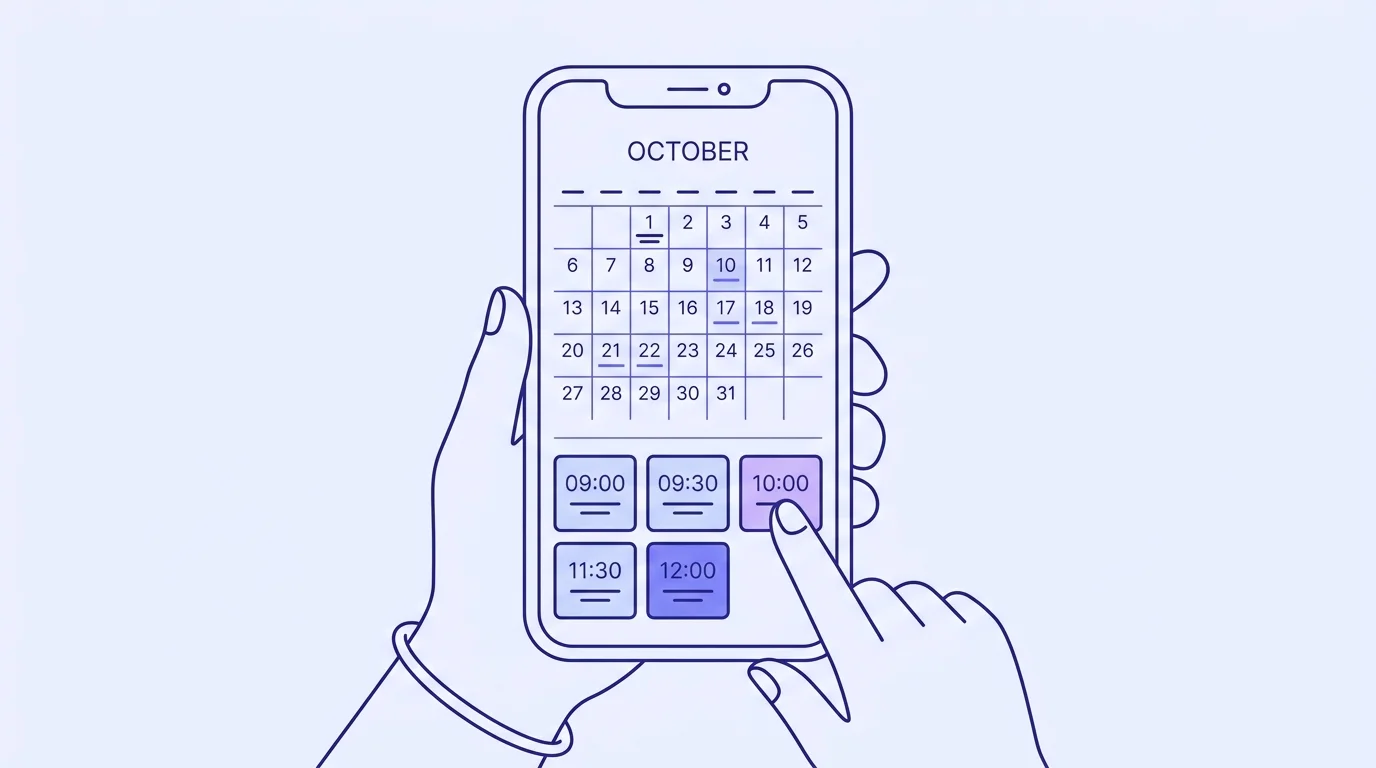
If your business runs on booked consultations, lead generation has one job: fill your calendar with qualified appointments. Not raw enquiries that sit in an inbox. Not a spreadsheet of names you might call back. Actual confirmed times where a real prospect shows up ready to talk. For appointment-based businesses in New Zealand, the goal is a full, qualified diary, and everything in your marketing should be measured against that.
This matters because an appointment-based model behaves differently from a model that sells a product online. A clinic, a dental practice, a physio, a salon, a mortgage adviser, a consultant, or a tradie quoting on site all make money the same way: they turn attention into a booked time slot, then turn that slot into a paying client. The leak is almost never the top of the funnel. It is the gap between someone being interested and someone being booked, and then between being booked and actually turning up.
This guide walks through how lead generation works specifically for appointment-based businesses in New Zealand, and how to build a system that keeps your calendar full of the right people.
Why a Booked Appointment Beats a Raw Lead
Most marketing advice treats a lead as the finish line. For appointment-based businesses, a raw lead is barely the starting line.
A raw lead is a name and a number. Someone filled in a form or left a voicemail. They are interested, maybe, but nothing is locked in. Raw leads decay fast. They go cold, they shop around, they forget they ever enquired, and they book with whoever responds first.
A booked appointment is a commitment. The prospect has chosen a time, blocked it out, and mentally agreed to show up. The distance between “I might look into this” and “I have a 2pm Thursday” is exactly the distance that determines whether you get paid.
What this changes about your numbers
When you measure raw leads, the headline metric looks healthy and the bank account does not. You can generate 100 enquiries a month and still have a quiet calendar if most never convert into a confirmed booking. When you measure booked appointments instead, the picture sharpens: you stop celebrating volume and start caring about show-up rate, and you can work backwards from revenue to the appointments you actually need.
Say, hypothetically, you close one in three consultations and an average client is worth $2,000. To add $20,000 in revenue you need 10 new clients, which means roughly 30 booked appointments. Now the marketing question is concrete: how do we reliably book 30 qualified appointments? That is a target you can build a system around. “Get more leads” is not.
Frictionless Online Booking and Calendar Integration
The single biggest upgrade most appointment-based businesses can make is letting people book themselves, instantly, without a phone call.
Think about how people behave. Someone is interested at 9pm on a Sunday. If your only option is “call us during business hours” or “fill in this form and we will get back to you”, you have just asked an interested person to wait, call back, then maybe play phone tag. A large share will not. They will book with the competitor who let them grab a Tuesday slot on the spot.
What good online booking looks like
Real-time availability: The booking tool should show genuine open times pulled live from your calendar, not a generic request form. The prospect picks a slot, it is theirs, done.
Two-way calendar sync: When a booking comes in, it appears in your calendar automatically and the slot disappears from public view. No double bookings, no manual data entry, no slot you forgot to block out.
Mobile-first: Most enquiries happen on a phone. If booking is fiddly on mobile, you lose bookings. The flow should be a few taps, not a pinch-and-zoom form.
The right amount of friction, in the right place: You want booking to be effortless, but you also want the slot to count. A short set of qualifying questions during booking does both jobs at once, which we will come back to.
For multi-location or multi-practitioner businesses, like a clinic with several physios or a salon with several stylists, the booking system also needs to route people to the right person and location. This is where a properly built funnel and booking setup earns its keep, because off-the-shelf tools often fall over once you add real-world complexity.
Speed-to-Lead: The First 5 Minutes
When someone cannot or does not self-book, and instead submits an enquiry, your response time decides almost everything.
The data on this is brutal and consistent. The chance of connecting with and qualifying a lead drops off a cliff after the first few minutes. A lead contacted within five minutes is dramatically more likely to convert than one contacted an hour later, and after a day the lead is, for practical purposes, cold. The person who enquired has moved on, contacted two competitors, or simply lost the moment of motivation that made them reach out.
Why appointment-based businesses lose here
The classic pattern: a busy clinic, salon, or trade business is heads-down doing the actual work. Enquiries pile up in an inbox or a missed-call list. Someone gets to them at the end of the day, or the next morning. By then half have booked elsewhere.
The fix is to treat speed-to-lead as a system, not a personal habit. New enquiries trigger an instant notification to whoever can respond, an automatic acknowledgement goes out immediately so the prospect knows they have been heard, and the first human reply, by text or call, aims to land within five minutes and offer a specific time, turning the enquiry straight into a booking.
This is genuinely the highest-leverage change most businesses can make. For the detail, read why the first five minutes determines your conversion rate and the practical playbook for responding to leads in under five minutes, around the clock. The point is simple. You can pay for the best ads in the country, but if you take four hours to respond, you are funding your competitors’ calendars.
Reducing No-Shows With Reminders and Confirmations
A booked appointment is only worth something if the person turns up. For appointment-based businesses, no-shows are a silent revenue killer. Every empty slot is time you could have sold to someone else, and you almost never get it back.
No-shows happen for ordinary reasons. People forget. Life gets busy. The appointment felt low-commitment when they booked it days ago. A good system removes those reasons one by one.
The confirmation and reminder sequence
Instant confirmation: The moment someone books, they get a confirmation by email and ideally text, with the time, the location or video link, and what to expect. This does two things: it reassures them, and it gives the appointment weight.
Reminders at the right intervals: A reminder 24 hours out and another a couple of hours before the appointment dramatically lifts show-up rates. The closer reminder is the one that catches the “I forgot” cases.
Easy rescheduling: Counter-intuitively, making it easy to reschedule reduces lost revenue. A person who can move their slot in two taps stays in your system. A person who cannot simply ghosts, and you lose them entirely.
A reason to show up: The best confirmation messages reinforce value. A quick line about what they will get out of the consultation, or what to bring, turns a passive booking into an active commitment.
For clinics, dentists, and physios this is partly a clinical scheduling issue, but for every appointment-based business it is fundamentally a conversion issue. Lifting your show-up rate from, say, a hypothetical 70 percent to 90 percent is the same as getting nearly a third more appointments for free, with no extra ad spend.
Landing Pages Built Around Booking
When you run ads or rank in search, the page people land on is where the appointment is won or lost. A general homepage is the wrong destination. Homepages are built to explain everything to everyone, and they bury the one action you want.
A booking-focused landing page has one job and points everything at it. The visitor should understand, within seconds, what you do, who it is for, why you are trustworthy, and how to book.
What an appointment-driven landing page needs
A headline that matches the search: If someone clicked an ad for “Invisalign consultation Auckland”, the page should say exactly that. Message match between the ad and the page is one of the biggest levers on conversion, and a mismatch sends people straight back to Google.
The booking action front and centre: The calendar or the call-to-action should be visible without scrolling, and repeated down the page. Do not make a ready-to-book visitor hunt.
Trust signals that fit the model: Registrations and credentials for a clinic, before-and-after work for a salon, results and testimonials for an adviser or consultant, reviews and guarantees for a tradie. Appointment-based businesses ask for someone’s time, and often their trust on something personal, so proof matters more here than in most categories.
Friction stripped out: One clear path, minimal form fields, no distracting navigation pulling people off the page.
This is its own discipline. A well-built landing page designed for booking routinely outperforms a homepage by a wide margin for paid traffic, simply because it is built for the one thing that matters.
The Channel Mix: Where Booked Appointments Come From
Different channels do different jobs. For appointment-based businesses in New Zealand, the two workhorses are Google Ads and Meta, and they are not interchangeable.
Google Ads for high intent
Google Ads captures people who are already looking. Someone searching “physio near me”, “emergency dentist Wellington”, or “mortgage adviser Hamilton” has a problem right now and is actively hunting for a solution. That is the highest-intent traffic you can buy, and it converts into bookings faster than anything else.
For appointment-based businesses, Google search is usually the first channel to turn on, because the intent is explicit and immediate, the searcher is ready to book rather than browse, you can target by exact service and location, and it scales up and down with demand in real time. The trade-off is that you are limited by how many people are searching. You can only capture existing demand, not create it.
Meta for demand generation
Meta, meaning Facebook and Instagram, does the opposite job. It puts you in front of people who are not actively searching but fit your ideal client, creating demand you would never have captured on Google, and it keeps you top of mind so that when the need arises, you are the obvious choice. It is particularly strong for appointment-based businesses with a visual or lifestyle element, like salons, beauty and cosmetic clinics, and consultants building a personal brand, and it is excellent for retargeting the people who visited your booking page but did not book.
The right answer is almost always a mix. A typical approach for a paid advertising programme is to use Google to capture the people ready now, and Meta to fill the pipeline with the people who will be ready soon, then retarget across both so no warm prospect slips away.
Qualification: Only Spend Time on Real Prospects
Here is the trap appointment-based businesses fall into when lead generation starts working. The calendar fills up, but with the wrong people. Time-wasters, price-shoppers, the curious, and people who were never a fit. Your diary is full and your revenue is not.
The solution is qualification, and the trick is to do it before the appointment, not during it.
Qualifying at the point of booking
A short set of well-chosen questions in the booking flow does most of the work. For a mortgage adviser, that might be deposit and income range. For a cosmetic clinic, the treatment of interest and timeframe. For a consultant, budget and the problem they are solving. For a tradie, the type, rough scope, and location of the job.
This does three things at once:
- It filters out people who are clearly not a fit, before they take a slot
- It tells you who the high-value bookings are so you can prioritise them
- It arms you for the conversation, so the appointment itself converts better
Qualifying fast, at scale
For higher volumes, you want qualification to happen quickly and consistently rather than depending on whoever happens to pick up the phone. The aim is to reach every lead in minutes, ask the right questions, and book only genuine prospects into the calendar while politely filtering the rest. Done well, this is the difference between a calendar full of appointments and a calendar full of the right appointments.
This is exactly what a dedicated lead qualification process is for. It protects the most valuable thing an appointment-based business has, the practitioner’s or owner’s time, and makes sure every slot on the calendar is one worth showing up for.
How Lucid Leads Helps
Most appointment-based business owners do not have a lead generation problem in isolation. They have a connected set of leaks: enquiries that come in too slowly, a booking process with too much friction, landing pages that do not convert, no-shows eating the calendar, and time wasted on prospects who were never going to book.
At Lucid Leads, we build the whole system as one piece for appointment-based businesses across New Zealand:
- Paid ads on Google and Meta to put you in front of the right people, both those searching now and those who will be soon
- Landing pages and funnels built around a single goal, getting a qualified person booked
- Speed-to-lead and qualification so every enquiry gets a fast response and only real prospects reach your calendar, plus optional 10-minute lead calls from our team
- Confirmations and reminders so the appointments you win actually turn up
The result we aim for is a calendar that stays full of booked, qualified appointments, so you can spend your time doing the work you are good at instead of chasing leads. That is the thinking behind our 30 leads in 30 days approach, built around booked appointments rather than empty enquiry counts.
Ready to fill your calendar with qualified appointments? Book a free strategy call and we will map out exactly how a booking-driven lead generation system would work for your business.
Frequently Asked Questions
What counts as an appointment-based business?
Any business that earns its money through booked consultations or appointments. That includes clinics, dentists, physios, salons and beauty, cosmetic clinics, mortgage and insurance advisers, consultants and coaches, and trades that quote on site. If your sales process depends on getting someone into a booked time slot, the strategies in this guide apply directly to you.
How is lead generation different for appointment-based businesses?
The finish line is different. For an online shop, a lead generation campaign can aim straight at a sale. For an appointment-based business, the immediate goal is a booked, qualified appointment, because that is the step that leads to revenue. The whole system, from ads to landing pages to follow-up, should be measured by how many qualified appointments it books and how many of those people show up, not by raw enquiry volume.
How do I reduce no-shows?
Build a confirmation and reminder sequence. Send an instant confirmation when someone books, a reminder around 24 hours before, and another a couple of hours out. Make rescheduling easy so people move their slot instead of ghosting, and reinforce the value of the appointment in your messages. Lifting your show-up rate even modestly is often the single most profitable change you can make, because it adds appointments without adding ad spend.
Should I use Google Ads or Meta?
Most appointment-based businesses benefit from both, doing different jobs. Google Ads captures people actively searching for your service right now, which is the highest-intent traffic and usually the fastest route to bookings. Meta creates demand and keeps you top of mind among people who fit your ideal client but are not searching yet, and it is excellent for retargeting. A mix of the two, with retargeting across both, tends to deliver the most consistent flow of booked appointments.
How quickly should I respond to a new enquiry?
As close to instantly as you can manage, ideally within five minutes. The likelihood of connecting with and converting a lead drops sharply after the first few minutes, so the businesses that respond fastest win the bookings. The most reliable way to hit that standard is to systemise it with instant notifications, automated acknowledgements, and a fast qualification process, rather than relying on someone remembering to check the inbox.
Related Articles
Continue learning about lead generation and paid advertising

Lead Generation for Physiotherapists NZ: Fill Your Clinic
Proven lead generation for physiotherapists in New Zealand. Get more booked appointments, reduce no-shows, and fill your physio clinic with the right patients.
Lead Generation for Veterinary Clinics NZ: More Patients
Proven lead generation strategies for veterinary clinics in New Zealand. Attract new pet owners, fill your appointment book, and grow your active patient base.
Written by

Founder & Lead Generation Specialist
Jason Poonia is the founder of Lucid Leads, helping service businesses across New Zealand generate qualified leads through paid advertising and conversion-focused funnels. With a background in Computer Science from the University of Auckland and over 5 years of experience running lead generation campaigns, Jason has helped businesses in construction, trades, real estate, and professional services generate thousands of qualified leads. His data-driven approach combines targeted ad strategies with rapid lead qualification to deliver prospects who are ready to buy.