
Lead Gen News: July 2026 - Google's Journey Bidding, New Lead Dashboard, and Meta's AI Creative Push

Four significant platform changes landed in the last two weeks that affect how NZ service businesses run their paid lead generation. Google’s journey-aware bidding algorithm now tracks leads all the way to closed jobs, not just form fills. Smart Bidding Exploration is averaging a 19% lift in conversions for campaigns using it. Dynamic Search Ads have a September retirement deadline. And Meta is rolling out AI video creative tools that used to require a production budget most local businesses don’t have.
Here is everything that changed, what it means, and what to do about it.
Google’s New Built-In Lead Management Dashboard
Google Ads launched a dedicated lead management interface in late May 2026, and it deserves more attention than it has received.
For the first time, advertisers using Google-hosted lead forms can manage their entire lead pipeline directly inside Google Ads. No export to a spreadsheet, no third-party CRM integration required. The dashboard shows total leads, new leads, qualified leads, and lost leads in a single consolidated view. You can review individual lead records, contact details, and where each lead sits in your funnel.
The real value is in the bidding signal
The dashboard itself is useful, but the reason it matters is what you can do with the data.
When you mark a lead as qualified or lost inside the interface, that signal flows directly back into Google’s Smart Bidding system. The algorithm then learns which lead sources, keywords, and ad types are producing real jobs rather than form submissions from people who will never call back. Over time, bidding shifts toward the traffic that actually converts to revenue.
For an Auckland plumber where a booked job is worth $800 to $3,000, the gap between a genuine enquiry and a time-waster is significant. Previously, Smart Bidding treated every form submission as an equal win. Now it can tell the difference, provided you feed it accurate outcome data.
What to do now
Log into Google Ads and look for the Leads section in the main navigation. Set up lead statuses and review the dashboard weekly. The more consistently you update lead outcomes, the faster Smart Bidding will refocus your budget on the traffic that produces actual work.
For businesses running fewer than 100 leads a month, the native dashboard will likely handle everything you need. Larger operations with complex pipelines may still want a CRM, but even then, syncing outcome data back to Google Ads through this interface is worth doing.
Journey-Aware Bidding Is Now in Beta
This is the more significant story, and it could shift the economics of paid lead generation for service businesses with longer sales cycles.
Journey-aware bidding allows Google’s Target CPA algorithm to learn from both biddable and non-biddable conversion goals. In plain English: instead of optimising only for form submissions, the system can factor in what happens after the form is submitted. Quote requests, booked appointments, signed contracts, and repeat jobs all become signals the algorithm can incorporate.
The feature is currently in beta, with no confirmed general availability date. Early access is being prioritised for advertisers with longer, more complex sales funnels: B2B companies, healthcare providers, financial services firms, and professional services businesses.
Who should be watching this closely
If your sales cycle involves multiple steps between the initial form fill and a signed client, journey-aware bidding is directly relevant.
Consider a Wellington law firm where an online enquiry leads to a consultation, then a signed retainer worth $5,000 or more. Standard lead campaigns optimise to put enquiries in the inbox. Journey-aware bidding, when it has enough data, starts to understand which enquiry sources, keywords, and ad creative types produce clients rather than enquiries that go nowhere.
The same logic applies to:
- Dental clinics where an online inquiry becomes a new-patient exam, then ongoing treatment across months
- Commercial builders where a lead converts across a site visit, a detailed quote, and a contract that might run $200,000 or more
- Financial advisers where a web lead converts across several meetings before any product is placed
- Specialist clinics where the patient journey from initial contact to booked procedure spans weeks
The practical limitation with standard campaigns is that they optimise to the top of your funnel. If your highest-value clients consistently come from a specific keyword category, suburb, or ad type, the algorithm cannot discover that pattern unless you are explicitly importing downstream conversion data every week. Journey-aware bidding addresses this at the system level rather than requiring constant manual data uploads.
For businesses that are not yet tracking calls and offline outcomes inside Google Ads, now is the time to set that up. See our guide to phone call lead tracking setup for Google Ads to get the foundation right before journey-aware bidding becomes widely available.
Smart Bidding Exploration Expands to Performance Max
Google confirmed in June that Smart Bidding Exploration, previously limited to Search campaigns, now extends to Performance Max campaigns without product feeds. A Shopping ads beta is also now live for eligible advertisers.
The reported performance improvement is notable. Campaigns using Smart Bidding Exploration are seeing 18% more unique converting search query categories and 19% more conversions on average, according to Google’s own announcement.
The feature works by letting advertisers set a ROAS tolerance, giving the algorithm permission to pursue conversion opportunities in adjacent query categories it would otherwise pass over. Think of it as allowing your campaigns to test neighbouring search territory without requiring you to manually build out new ad groups.
The catch for local service businesses
The ROAS tolerance setting is only meaningful if you know your revenue per lead, not just your cost per lead. If you are an Auckland HVAC contractor and your average job is worth $2,500, you can set a ROAS target that reflects what you are actually willing to spend to acquire a booking. If you are measuring leads without any downstream job-value data, the tolerance setting has no anchor and will produce unpredictable results.
The expansion to Performance Max also has a direct implication. If you are already running PMax campaigns for lead generation, the algorithm is now looking at a broader range of potential queries than before. That is generally positive, but it does mean your quality signals, particularly your customer lists and offline conversion data, matter more than they did three months ago.
For a breakdown of how Performance Max and Search campaigns work differently for lead generation, see our guide on the difference between Search campaigns and Performance Max.
Promotion Mode is also in beta
Google launched Promotion Mode in June 2026 alongside the Smart Bidding Exploration expansion. This allows advertisers to temporarily raise their ROAS target and allocate additional daily budget during high-demand periods, without permanently disrupting campaign settings or triggering a new learning phase.
For a Southland heating company seeing surge demand during a cold snap, or an electrician responding to post-storm call volume, the ability to activate a short burst mode for two or three days is genuinely useful. Previously, increasing budget aggressively during a demand spike would often reset the learning phase and temporarily hurt efficiency. Promotion Mode is designed to avoid that.
Local Services Ads Got a Policy Refresh on July 6
The changes are administrative rather than significant in practice, but they signal something worth watching.
On July 6, 2026, Google renamed its “Local Services platform policies” to “Local Services Ads requirements.” The documentation was rewritten for clarity, some outdated requirements were removed, and the overall framework was aligned with recent updates to the Google Guarantee badge verification process.
Nothing changes in your current setup. No action is required today.
What the language shift signals
Moving from “policies” to “requirements” is deliberate. Google’s announcement noted that compliance standards may be tied directly to badge status in future updates. The implication is a tighter enforcement framework ahead, where your Google Guarantee or Google Screened badge depends not just on passing an initial verification but on meeting ongoing, auditable requirements.
For a Wellington accountancy firm or Auckland medical clinic paying a premium to appear in LSA results, this is worth tracking. Keep your licences and professional indemnity insurance documents current, respond to review disputes promptly, and make sure the business details in your LSA profile match what is on your website.
The comparison between Local Services Ads and standard Google Ads has more on when each format makes sense for NZ service businesses.
Dynamic Search Ads Are Being Retired: September Is the Deadline
If any of your campaigns use Dynamic Search Ads targeting, the clock is running.
Google confirmed earlier this year that DSA will be retired in favour of AI Max for Search, with automatic migrations beginning September 2026. From July 6, advertisers with affected campaigns are starting to receive in-account notifications flagging that action may be needed before the migration runs.
What to do before September
AI Max for Search replaces DSA’s page-crawling approach with a broader AI-driven keyword expansion method. The migration happens automatically, but leaving it entirely to Google is risky.
Before September, identify which campaigns are using DSA targeting. Pull the search terms report for those campaigns and document the query categories that are producing leads at acceptable cost. That gives you a baseline to compare against once the AI Max migration runs.
The retirement does not mean your campaigns will go dark. It means the targeting mechanism changes, and performance may shift in either direction during the transition period. Build a monitoring task into your August calendar now rather than scrambling to explain a performance change in September.
Meta’s AI Creative Push: UGC Videos and AI Voiceovers
On the Meta side, the main story of the past two weeks is the rollout of AI-powered creative tools that were previously only accessible to advertisers with production budgets.
Meta is rolling out tools to generate UGC-style video content using AI, including realistic clips of a person discussing a service in a testimonial-style format. AI voiceovers, automatic translations, and smart asset resizing across placements are also being made available to a wider range of advertisers.
What this means for NZ service businesses running lead ads
The honest assessment: AI-generated testimonial-style videos require careful handling in regulated sectors. A Christchurch physiotherapy clinic or Auckland law firm cannot use fabricated client testimonials, even clearly AI-generated ones, without running into Advertising Standards Authority guidelines and professional body rules. Be clear on what the ASA allows before using these formats.
For less regulated service businesses, the picture is more straightforward. Landscapers, renovation contractors, cleaning companies, and HVAC businesses can use AI-generated creative responsibly to build the creative volume that Meta’s Andromeda algorithm rewards. The algorithm performs best when campaigns contain 15 or more distinct creative themes. Most small businesses cannot afford to produce that volume of real-world video content, so these tools lower a meaningful barrier.
The practical approach: use the AI video tools for process walkthrough content, before-and-after explanations, and how-to formats. These give you creative volume without compliance risk, and they suit the service business context far better than fabricated social proof.
For a full breakdown of how Advantage+ campaigns work with Meta’s Andromeda system and why creative volume matters, see the Advantage+ campaign guide for NZ service businesses.
The Common Thread Across All of This
These updates are all moving in the same direction. Google and Meta are both reducing the manual controls advertisers can operate, replacing them with AI systems that need quality signals to perform well.
Journey-aware bidding needs consistent downstream conversion data. The lead management dashboard only improves Smart Bidding if you update lead outcomes regularly. Smart Bidding Exploration needs accurate ROAS targets based on real job values. The AI creative tools produce better results when campaigns are fed with strong audience signals from a real customer list.
The businesses that will struggle in the second half of 2026 are those still trying to run campaigns the way they did in 2024: manually controlling audiences, bids, and placements while ignoring the data-feeding requirements of the new automated systems.
The businesses that will perform well are those investing in the unglamorous work. Updating lead statuses in the dashboard weekly. Uploading customer lists. Feeding offline conversion data back to the platform monthly. Reviewing creative performance and rotating the bottom performers every 30 days.
None of this requires a large budget. It requires consistency.
If you want to know how these specific changes affect your campaigns and what to prioritise first, book a free strategy call with Lucid Leads.
Frequently Asked Questions
Does the new Google lead management dashboard replace my CRM?
For most local service businesses running under 100 leads a month, it handles everything you need. For businesses with complex pipelines, large sales teams, or automated follow-up workflows, it is a complement to your CRM rather than a replacement. The key value is in feeding lead-quality signals back to Smart Bidding, which the native dashboard enables without requiring a full CRM integration.
Is journey-aware bidding available to NZ advertisers yet?
It is currently in beta with US-first access. NZ advertisers cannot opt in directly right now, but broader rollout is expected later in 2026. The practical step today is making sure your offline conversion tracking and lead status updates are set up correctly so you are ready when access becomes available.
What happens to my Dynamic Search Ads campaigns in September 2026?
Google will automatically migrate them to AI Max for Search. Your campaigns will continue running, but the targeting approach changes. Pull your DSA search terms report now, document the converting query categories, and plan to monitor closely during the September transition period.
Can NZ service businesses use Meta’s new AI-generated video tools for lead ads?
Yes, with appropriate care. Avoid using them to produce anything that resembles a client testimonial if you operate in a regulated sector, including legal, medical, dental, financial advice, and physiotherapy. For less regulated businesses, use them for how-to content, service process explanations, and before-and-after formats.
How do I set a meaningful ROAS tolerance for Smart Bidding Exploration?
Base it on your actual average job value. If your typical booked job brings in $1,800, work backward from that to calculate what cost per lead still produces a profitable result. Use that figure to set your ROAS target and tolerance. A tolerance set without a real revenue anchor will not produce reliable results.
Ready to Generate More Leads?
Let's discuss how we can help you get 30 qualified leads in 30 days with our proven TAP System.
Book a Free Strategy CallRelated Articles
Continue learning about lead generation and paid advertising

Real Estate Lead Generation: How It Works and What You Should Pay
A practical guide to real estate lead generation: how the funnel works, what a qualified lead is worth, and how to choose the right channel for your market.
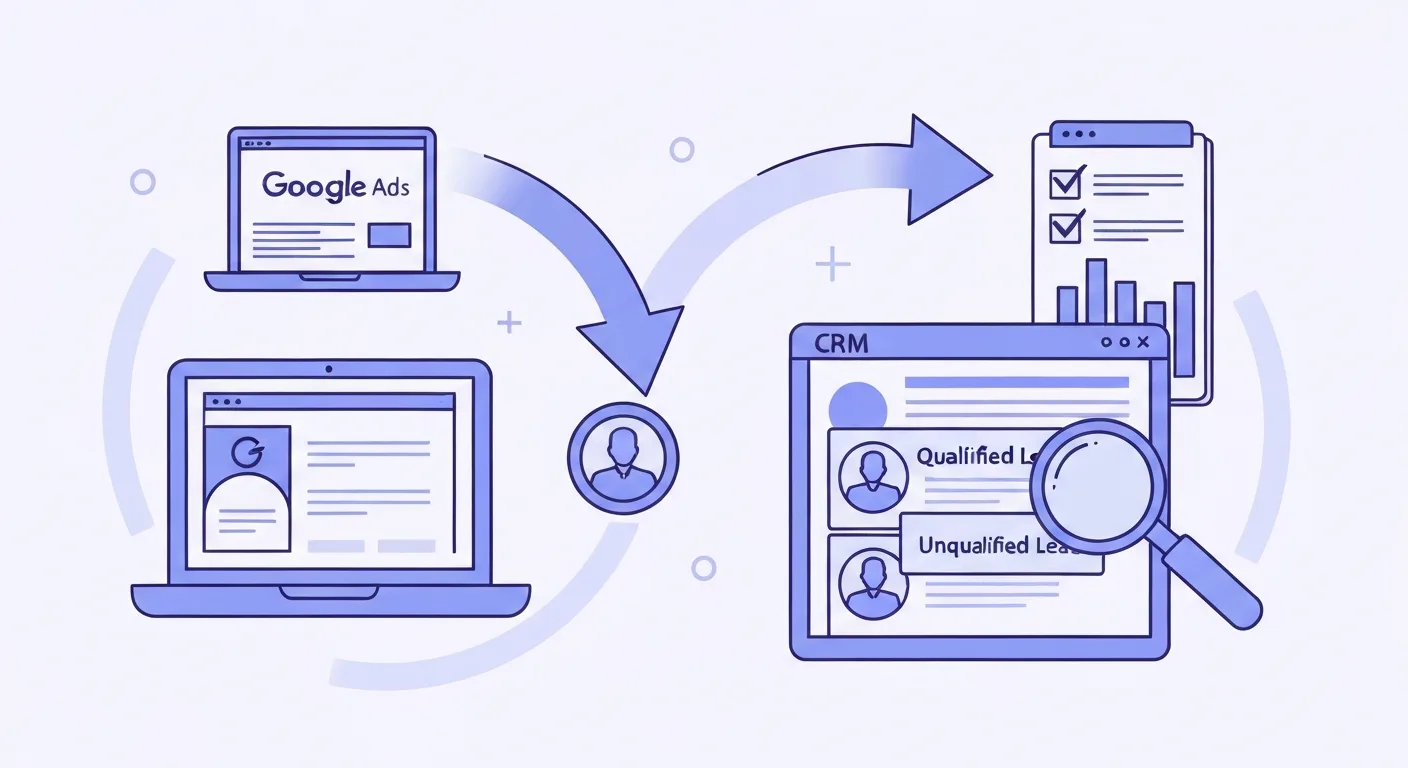
How to Get Google Ads to Send You Qualified Clients, Not Junk Leads
Professional services firms in NZ pay top dollar for Google Ads clicks. Here's the quality signal loop that makes Google AI find clients, not form-fill junk.
Written by

Founder & Lead Generation Specialist
Jason Poonia is the founder of Lucid Leads, helping service businesses across New Zealand generate qualified leads through paid advertising and conversion-focused funnels. With a background in Computer Science from the University of Auckland and over 5 years of experience running lead generation campaigns, Jason has helped businesses in construction, trades, real estate, and professional services generate thousands of qualified leads. His data-driven approach combines targeted ad strategies with rapid lead qualification to deliver prospects who are ready to buy.