
Landing Pages That Turn Google Ads Clicks Into Booked Jobs
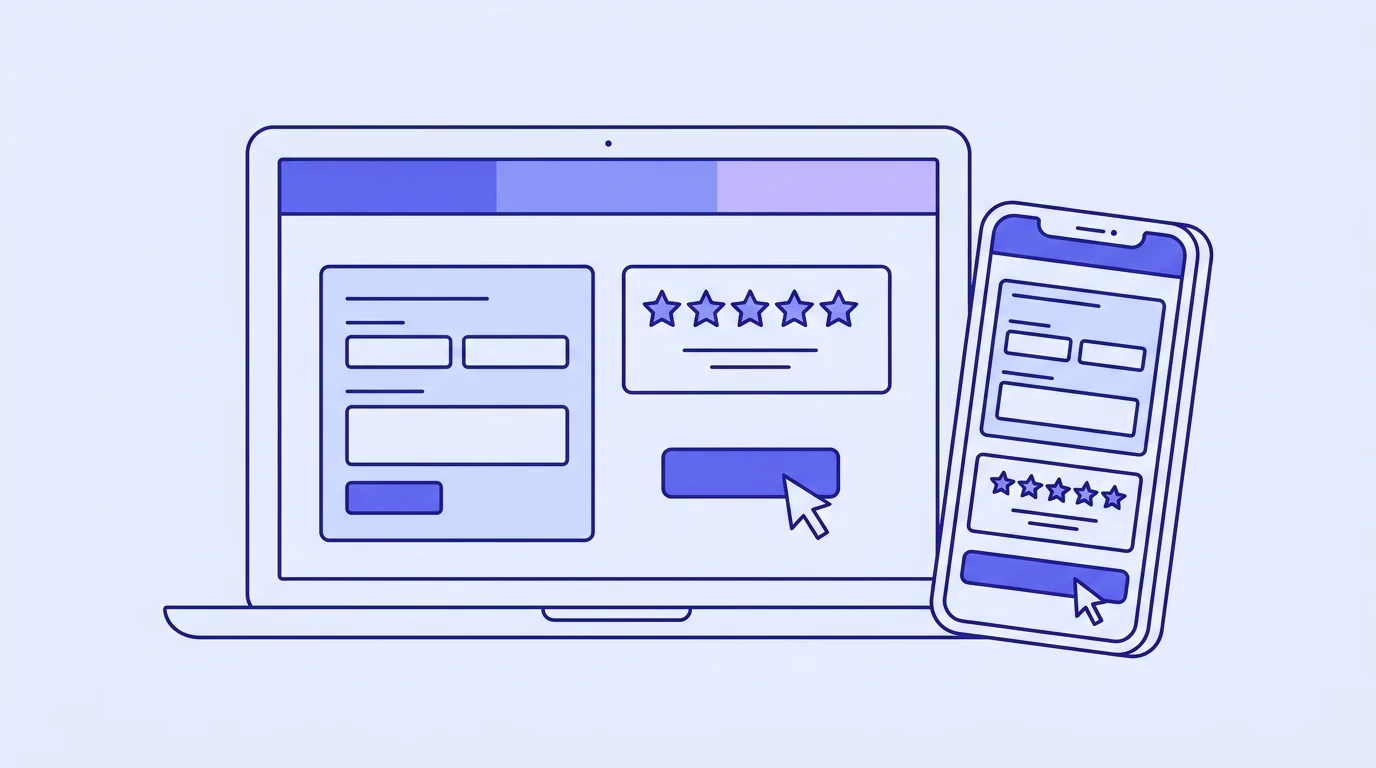
You can pick perfect keywords and write brilliant ads, and still lose money on Google Ads. If the page people land on does not convert, every click is paying for a visitor who quietly leaves. The landing page is where the money is actually made or lost, and it is the part most service businesses neglect.
The good news is that a focused page can convert at a far higher rate than a generic site. We have seen well-built service pages convert around one in five visitors into an enquiry. Here is what separates a page that books jobs from one that just collects clicks.
Start with message match
Before any of the elements below matter, the page has to match the search and the ad that brought the visitor there. Someone who clicked “Emergency Plumber Wellington” should land on a page about exactly that, not a general homepage. We cover this in depth in the city and service landing page playbook, but it is the foundation everything else sits on. Get the match wrong and the best design in the world will not save you.
The elements of a landing page that converts
1. Split test, do not guess
I can tell you what I think works. Your mate at the barbecue thinks they know too. We could both be wrong. The only thing that settles it is testing two versions against each other and tracking what actually happens. Treat your strong opinions as starting points, then let the data decide. Continuous split testing is the highest-leverage habit in conversion, because it replaces guesswork with evidence.
2. Lead with social proof, especially video
People want to know they can trust you before they enquire. The best indicator of future performance is past performance, and the clearest way to show past performance is social proof. Video testimonials are the single most powerful version of this, because a real customer on camera is far more convincing than a line of text. Reviews, recent jobs, and recognisable local names all help too. Put the proof where visitors will see it, not buried at the bottom.
3. Put the form on the page
If someone is ready to enquire, do not make them hunt. Your enquiry form, or a tap-to-call button, should be right there on the landing page, not tucked away on a separate contact page. Every extra click you ask for lowers your conversion rate, because some people drop off at each step. Keep the form short, ask only for what you need to follow up, and make the action obvious.
4. Add a founder video
Here is a subtle but important point. If someone is searching for a plumber, you do not need to convince them they need plumbing. They know. What they are really deciding is who to call. A short founder video, where you introduce yourself and come across as warm, capable, and easy to deal with, sells the one thing your competitors cannot copy: you. People want to work with people they like and trust. This is your chance to be the obvious choice over the other name on the list.
5. Respond at the speed of the click
Conversion does not end when the form is submitted. The highest-leverage thing you can do next costs nothing: call the lead within 60 seconds. The average business takes around 48 hours, and that gap is where sales are lost. Fast follow-up can multiply the number of enquiries that turn into booked jobs, simply because you reached the person while they were still looking. We dig into the numbers in why profit, not clicks, is the metric that matters.
6. Make a clear, specific offer
Vague pages convert poorly. Give visitors a concrete reason to act now, whether that is a free quote, a same-day callout, a fixed-price inspection, or a genuine guarantee. A strong offer lowers the risk of getting in touch and gives people a reason to choose you today rather than keep scrolling.
7. Strip out the distractions
A landing page has one job. Remove the full navigation menu, the links to unrelated pages, and anything that invites the visitor to wander off. Every distraction is a chance for someone to leak away before they enquire. One page, one message, one action.
Then track it, so you know it is working
A converting page is only half the picture. You also need a tracking tag in place so you can measure your conversion rate properly and build an audience of people who visited but did not enquire, ready to bring them back with retargeting. Warm visitors who already know you convert at a much higher rate than cold ones, so the data you collect on the page keeps paying off long after the first visit.
The page is where the budget pays off
Keywords get you the click. The landing page decides whether that click becomes a job. Match the page to the search, lead with proof, make the form impossible to miss, put yourself on camera, follow up fast, and remove every distraction. Do that and the same ad budget produces far more booked work.
If your ads are getting clicks but not enquiries, the page is almost always the culprit. Book a free strategy call and we will review your landing pages, or see how we approach landing page design for NZ service businesses and the funnels that sit behind it.
Frequently asked questions
What is a good landing page conversion rate?
It varies by industry and traffic quality, but many service business pages sit somewhere around 2 to 5 percent, and a well-built, well-matched page can do considerably better. The number matters less than the trend: test, measure, and improve it over time. Our seven landing page elements that triple conversion rates is a good next read.
Should I send Google Ads traffic to my homepage or a landing page?
A dedicated landing page, almost always. Homepages are built to serve everyone and convert paid traffic poorly because they lack message match and focus. A page built for the specific search will out-convert a homepage by a wide margin.
Do I really need a video on the page?
You do not strictly need one, but it is one of the highest-return additions you can make. A founder video and customer video testimonials build trust faster than text alone, and trust is what turns a visitor into an enquiry. If you only add one thing, make it social proof.
How do I test landing pages without lots of traffic?
You need enough visitors for a result to mean something, so with low traffic, test bigger changes (a different headline, offer, or layout) rather than tiny tweaks, and give each test time. If volume is very low, focus first on message match and a strong offer, which usually move the needle most.
Ready to Generate More Leads?
Let's discuss how we can help you get 30 qualified leads in 30 days with our proven TAP System.
Book a Free Strategy CallRelated Articles
Continue learning about lead generation and paid advertising
The City and Service Landing Page Playbook for Local Lead Gen
A generic homepage kills local ad performance. Here is the city and service landing page playbook NZ service businesses use to win more local enquiries.
The Keyword Mistake That Burns NZ Service Businesses' Ad Budget
Wasted Google Ads spend usually comes from the wrong keywords and match types. Here is how NZ service businesses pick keywords that turn into paying customers.
Written by

Founder & Lead Generation Specialist
Jason Poonia is the founder of Lucid Leads, helping service businesses across New Zealand generate qualified leads through paid advertising and conversion-focused funnels. With a background in Computer Science from the University of Auckland and over 5 years of experience running lead generation campaigns, Jason has helped businesses in construction, trades, real estate, and professional services generate thousands of qualified leads. His data-driven approach combines targeted ad strategies with rapid lead qualification to deliver prospects who are ready to buy.