
Google Demand Gen Campaigns: A Complete Guide for NZ Service Businesses

Google Demand Gen campaigns place visual ads across YouTube, Gmail, and Google Discover, targeting people based on interests and intent signals before they search for your service. For NZ service businesses, this means you can reach potential customers while they are browsing content online, well before they open a new tab and type your service category into Google.
The short answer: Demand Gen is how you generate demand, not just capture it. If your current Google Ads strategy relies entirely on Search campaigns, you are only ever competing for leads who already know they need your service. Demand Gen lets you reach the much larger audience of people who need your service but have not yet started searching.
This guide covers what Demand Gen campaigns are, how they differ from Performance Max and Search, and a step-by-step setup process for NZ service businesses looking to scale their lead volume.
What Are Google Demand Gen Campaigns?
Demand Gen campaigns run visual ads across three surfaces: YouTube (in-feed video, in-stream, and Shorts), Gmail (Promotions and Social tabs), and Google Discover feeds. Launched in 2023 as a replacement for the older Discovery campaign format, Demand Gen gives advertisers more creative control and significantly more placement inventory than its predecessor.
The campaign type targets users based on browsing behaviour, interest categories, and intent signals rather than active search queries. Google’s AI finds the right users across these surfaces and serves the right creative at the right time.
For lead generation, the key benefit is reach. According to Google’s internal analysis, 68% of Demand Gen conversions come from users who had not seen the brand’s Google Search ads in the prior 30 days. That is new audience territory that Search campaigns alone cannot touch.
How Demand Gen Differs from Performance Max
Performance Max (PMax) and Demand Gen are both AI-powered Google Ads campaign types, but they operate very differently.
PMax is fully automated. You provide assets and conversion goals, and Google’s AI decides where, when, and to whom your ads appear across all Google surfaces. You get limited insight into what is actually driving performance.
Demand Gen gives you more control. You define your audiences, select your placements, and build separate creative for each surface. You can also run Demand Gen alongside Search without the budget cannibalisation that frequently occurs with PMax.
For NZ service businesses that already have Search campaigns performing well and want to expand reach without surrendering control, Demand Gen is the better option. See our guide on the difference between Search campaigns and Performance Max for a deeper comparison.
Why Demand Gen Campaigns Work for NZ Service Businesses
Most service businesses lean heavily on Search campaigns for lead generation. That is logical, but it creates a ceiling. You can only capture the demand that already exists.
Demand Gen breaks through that ceiling by warming audiences up before they search. When a potential client in Christchurch watches a quick testimonial video from your business on YouTube on Monday, then sees a Gmail ad from you on Wednesday, and then searches for your service category on Friday, your name is already familiar. Familiarity drives click-through rates and, more importantly, conversion rates.
This is the strategic value of Demand Gen for NZ service businesses. It is not a replacement for Search. It is the layer that makes Search work harder.
Who Should Use Google Demand Gen Campaigns
Demand Gen works best for NZ service businesses that have:
A visual story to tell. Transformations, results, and process work well. A kitchen renovation company showing a before-and-after. A dentist demonstrating smile results. A mortgage broker sharing a short client success story on video. If your service is hard to visualise, focus on social proof and specific outcome statements instead.
A budget of at least NZ$2,000 per month. Below this, campaigns struggle to gather enough conversion data to exit learning phase and optimise effectively. If budget is a constraint, prioritise Search campaigns first and add Demand Gen once your lead volume is consistent.
First-party audience data. Demand Gen performs best when you seed it with quality audience signals: your existing customer list, lookalike audiences built from your best customers, and in-market segments relevant to your service category.
Meaningful conversion tracking. You need to measure form submissions, phone calls, or booked appointments. Better still, pass offline conversion data back into Google Ads so the algorithm can optimise toward actual paying clients, not just raw enquiry volume.
Setting Up a Google Demand Gen Campaign for Lead Generation
Step 1: Build Your Audience Signals
Start with your existing customer list. Upload it into Google Ads and create a lookalike audience based on your highest-value customers. Layer in in-market audience segments relevant to your service. A plumbing business might layer Home Improvement and Local Services audiences. A financial adviser might use Investment Products and Personal Finance intent audiences.
Avoid relying on broad or interest-based audiences alone. The more precise your audience signals, the faster the campaign learns and the lower your initial cost per lead.
Step 2: Create the Right Asset Mix
Google’s internal data shows campaigns using both video and image assets together generate 20% more conversions at equivalent cost per acquisition compared to campaigns running video only.
For a service business, build:
- At least one 15 to 30-second horizontal video (16:9) for YouTube in-stream. A client testimonial or a process walkthrough works well.
- At least one vertical video (9:16) for YouTube Shorts and mobile placements.
- Three to five square (1:1) and landscape (1.91:1) image ads with a specific headline and clear call to action.
All assets should include your branding prominently, one clear benefit statement, and a single next step. Demand Gen ads appear inside social feeds, so they need to look native rather than like standard banner ads. Aim for “Excellent” ad strength in your asset group.
Step 3: Set the Right Bidding Strategy
Start with Maximise Conversions to gather baseline data. Once you have at least 50 conversions in a 30-day window, switch to Target CPA (tCPA).
Set your tCPA target 10 to 15% above your current Search campaign cost per lead to start. A target that is too aggressive restricts delivery and extends the learning phase. You can tighten it once performance stabilises.
Step 4: Enable Optimised Targeting
Optimised targeting allows Google to expand beyond your manually defined audiences when it identifies users likely to convert. This sounds like giving up control, but the performance data supports it. Google’s analysis of the first half of 2025 found that advertisers who opt into optimised targeting achieve 20% higher conversions at the same cost.
Enable it at campaign setup. Review the audience insights report weekly to see which segments Google is finding on your behalf.
Step 5: Connect Your Data Sources
Set up sitewide tagging with Google Tag Manager if you have not already. Connect your CRM data via Google Ads Data Manager to pass offline conversion signals back into the platform. If you run email marketing, import those lists as customer match audiences.
The more first-party data you supply, the better Demand Gen performs. According to Google’s February 2026 best practices guidance, advertisers who adopt at least three of the four recommended best practices see more than 40% more conversions on average.
Common Mistakes NZ Service Businesses Make with Demand Gen
Running Demand Gen without a Search campaign. Demand Gen warms audiences. Search captures them. Running Demand Gen in isolation generates awareness but loses the conversion. Always run both together. See our guide on retargeting vs prospecting for how the two strategies complement each other.
Using generic or low-quality creative. Demand Gen ads sit inside YouTube feeds and Gmail inboxes, competing with organic content. A stock photo with a generic headline will be scrolled past. Invest in authentic video, even short smartphone footage of your completed work or a 60-second client interview.
Setting the wrong conversion goal. Google optimises toward whatever you tell it to. If your conversion goal is a page view or a session, the campaign will find people who browse but never contact you. Set your conversion goal to a form submission, phone call, or appointment booking.
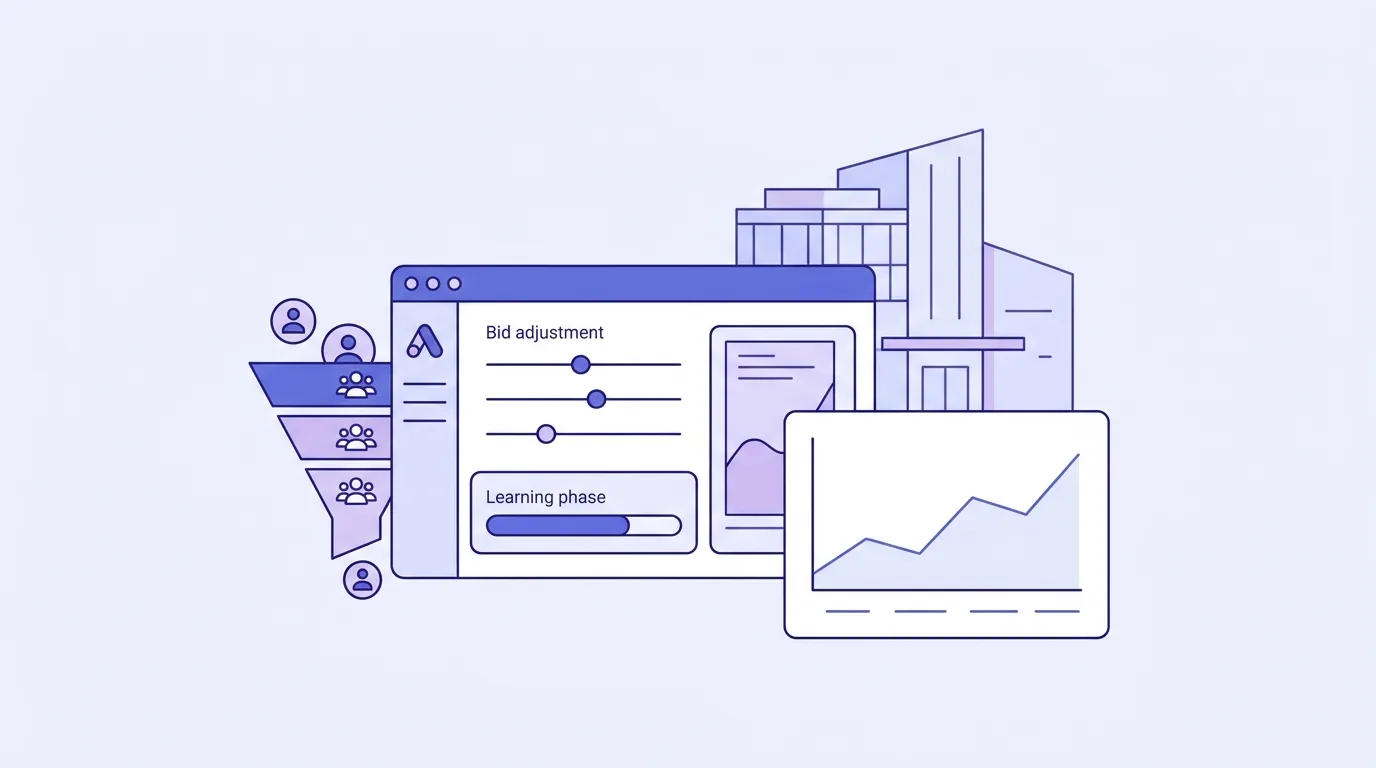
Making changes too early. Demand Gen campaigns need four to six weeks to exit learning phase. Changing bids, audiences, or creatives in the first two to three weeks resets the learning cycle and extends the optimisation timeline. Set your campaign up carefully, then let it run.
Ignoring the asset report. After three weeks, review the Asset report inside your campaign. Google rates each creative as Low, Good, or Best. Remove or replace any assets rated Low. Underperforming assets drag down overall delivery quality and inflate your cost per lead.
Ready to add Demand Gen to your Google Ads strategy? Book a strategy call with the Lucid Leads team and we will audit your existing campaigns and show you exactly where Demand Gen fits in your lead generation funnel.
Frequently Asked Questions
What is the minimum budget for Google Demand Gen campaigns in NZ?
A practical minimum is NZ$2,000 per month. Below this figure, campaigns generally do not gather enough conversion data to exit learning phase within a reasonable timeframe. If budget is limited, focus on Search campaigns first and add Demand Gen once your lead volume is consistent.
Do I need video to run a Demand Gen campaign?
You can run image-only Demand Gen campaigns. However, Google’s data shows that adding video to the asset mix produces 20% more conversions at the same cost per acquisition compared to image-only campaigns. A short smartphone video, even 15 seconds of a client testimonial, outperforms polished static ads in most service business categories.
Can Demand Gen campaigns replace my Search campaigns?
No. They serve different purposes. Search campaigns capture existing demand from people actively searching for your service. Demand Gen creates demand by reaching people who are not yet in the search phase. Running both together consistently produces better results than either campaign type alone.
How long before Demand Gen campaigns start delivering leads?
Most campaigns begin delivering conversions within the first two weeks, but cost per lead stabilises after four to six weeks as the algorithm optimises. Evaluate performance after the first full month, not the first week.
Is Google Demand Gen available in New Zealand?
Yes. Demand Gen campaigns are available globally, including New Zealand. All placements, including YouTube in-stream, YouTube in-feed, YouTube Shorts, Gmail, and Google Discover, are active for NZ advertisers.
Related Articles
Continue learning about lead generation and paid advertising
Google Ads Smart Bidding Doesn't Work for Most Professional Services Firms. Here's What Does.
Smart Bidding needs 50+ conversions a month to work. Most professional services firms get 8 to 15. Here's the bid strategy that actually works.

Lead Gen News: Late October 2026 - Google's LSA Merger, Meta's Product Browsing Deadline, and New Channel Priority Controls
Google folds Local Services Ads into Performance Max. Meta enables product browsing in existing ads on 28 October. New channel controls cap Display budget spend.
Written by

Founder & Lead Generation Specialist
Jason Poonia is the founder of Lucid Leads, helping service businesses across New Zealand generate qualified leads through paid advertising and conversion-focused funnels. With a background in Computer Science from the University of Auckland and over 5 years of experience running lead generation campaigns, Jason has helped businesses in construction, trades, real estate, and professional services generate thousands of qualified leads. His data-driven approach combines targeted ad strategies with rapid lead qualification to deliver prospects who are ready to buy.