
How to Turn Your Website Into a Lead Generation Machine
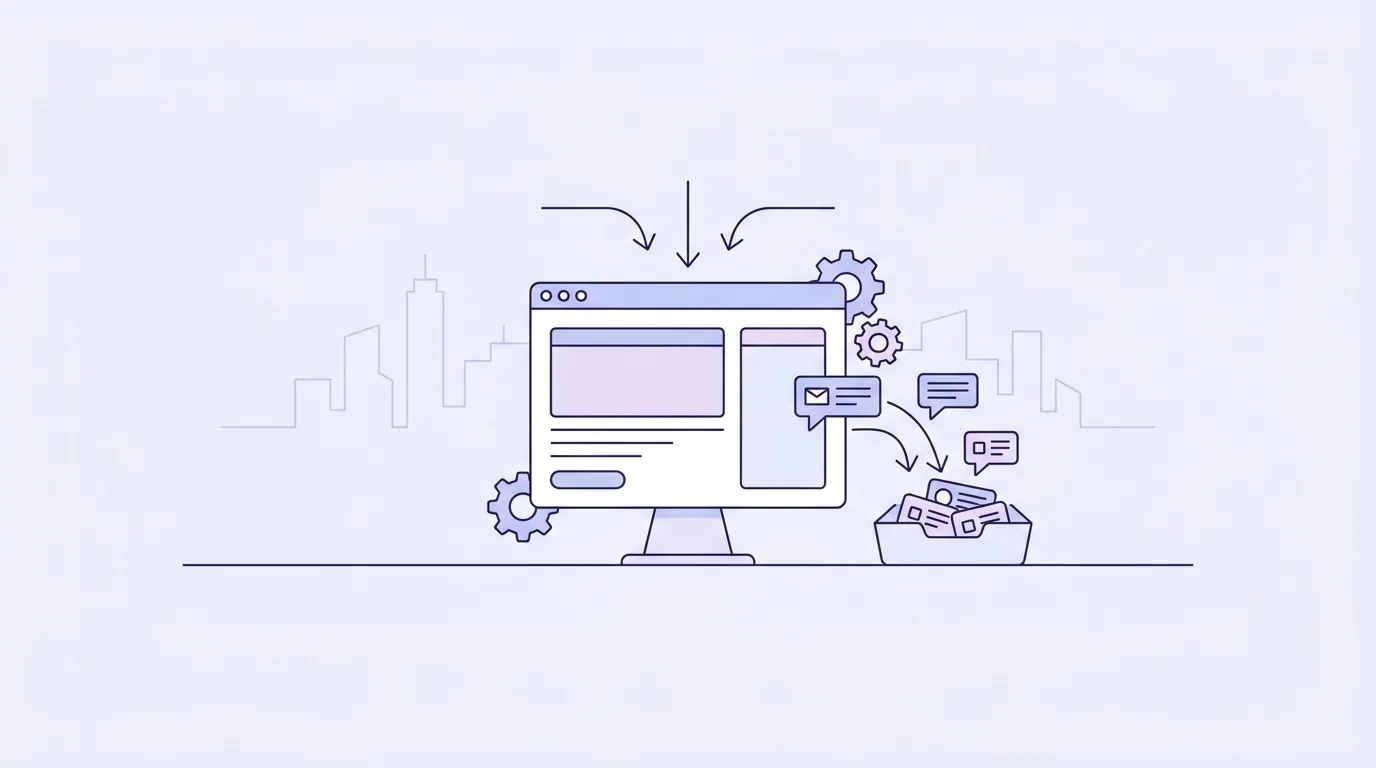
Most business websites are quiet salespeople. They look tidy, they list the services, and they sit there doing almost nothing. Website lead generation is the work of turning that quiet page into a system that captures enquiries day and night: a clear promise above the fold, one obvious next step, fast load times, proof a stranger can trust, and tracking so you know what is actually working. Do those five things well and a site that drips one or two enquiries a month can comfortably produce ten to twenty.
We build and optimise sites for New Zealand service businesses, and the pattern is the same almost every time. The traffic is usually fine. The problem is what happens after someone lands. They cannot tell in three seconds what you do, they cannot find how to get in touch, and nothing on the page gives them a reason to act today rather than “later” (which means never).
This guide walks through the exact changes we make, in the order we make them. No fluff, no theory you cannot use this week.
What Makes a Website a Lead Generation Machine
A lead generation website has one job: convert a visitor into a contactable enquiry. Everything else is decoration.
The maths is simple and worth internalising. If 1,000 people visit your site a month and 2% convert, that is 20 enquiries. Lift the conversion rate to 4% and you have doubled your leads without spending a cent more on traffic. That is why we almost always fix the site before we touch the ad budget. Pouring more visitors into a page that does not convert is just a faster way to waste money.
Three numbers decide your result: how many people arrive, what share of them enquire, and how many of those enquiries you actually answer in time. This guide is about the middle number, the conversion rate, because it is the cheapest and fastest to move.
1. Lead With a Promise, Not a Welcome
The top of your homepage, the part visible before anyone scrolls, is the most valuable space you own. Waste it on “Welcome to our website” or a slow-loading hero video and you have lost most visitors before they have read a word.
A stranger should be able to answer three questions within three seconds of landing:
- What do you do?
- Who is it for?
- What should I do next?
Write a headline that states the outcome
Lead with the result your customer wants, not your company name. “Auckland’s trusted plumbers” is weak. “Blocked drain in Auckland? We’ll be there today” is strong, because it names the problem and the outcome in one line.
We see the same lift again and again when we rewrite a vague headline into a specific one. The visitor instantly knows they are in the right place, and the bounce rate drops.
Put your phone number and a button up top
On a service site, your phone number should sit in the top right of every page, large enough to tap on a phone. Next to it, a single clear button: Get a Free Quote, Book a Call, Request a Callback. One primary action, repeated, beats five competing ones.
2. Give Every Page One Obvious Next Step
The fastest way to kill website lead generation is to offer too many choices. A visitor faced with ten links and no clear path tends to choose nothing.
Decide the single action you most want each page to drive. For most NZ service businesses that is a quote request, a booked call, or a phone call. Then build the page around it and remove anything that competes.
Make your calls to action impossible to miss
A good call to action is specific and tells the visitor what happens next. “Submit” is forgettable. “Get My Free Quote” or “Book My Free 15-Minute Call” works because it is written from the customer’s point of view and sets an expectation.
Repeat that call to action down the page. A visitor ready to act at the top should never have to scroll back up to find the button. We typically place one in the hero, one mid-page after the proof, and one at the very bottom.
Keep forms short
Every extra field costs you leads. For a first enquiry you usually need three things: name, contact detail, and what they need. Phone or email, not both required. You can qualify properly once they have raised a hand. Asking for a company name, a budget range and a preferred contact time up front is how you turn a warm lead cold.
3. Earn Trust Before You Ask for Anything
People do not enquire with a business they do not trust, and they decide on trust in seconds. Your site has to do the reassuring that a face-to-face conversation normally would.
Use proof a stranger can verify
Generic claims like “quality service” are invisible. Specific, checkable proof is what moves people:
- Google reviews with the star rating and count shown, ideally pulled in live.
- Real numbers: “Over 400 Wellington homes re-roofed since 2015.”
- Named testimonials with a first name, suburb and, where you can, a photo.
- Recognisable logos: trade memberships, certifications, or well-known clients.
One honest case study with a before, an after and a real result will outperform a wall of adjectives every time.
Show you are a real, local New Zealand business
Display a physical address or service area, a local phone number, and a real team photo. For NZ buyers, signals that you are local and reachable matter. A site that hides who is behind it reads as risky, and risky businesses do not get the enquiry.
4. Make It Fast and Mobile-First
Most of your traffic is on a phone. Across the NZ service-business sites we manage, mobile regularly accounts for 60 to 70% of visits, and for some trades it is higher. If your site is awkward on a phone, you are losing the majority of your leads before they ever see your offer.
Fix load speed first
Speed is both a ranking factor and a conversion factor. Research from Google has long shown that bounce rates climb sharply as a mobile page goes from one to several seconds to load. The common culprits are easy to fix: oversized hero images, heavy sliders, and too many plugins or scripts.
Compress your images, drop the autoplay video, and cut anything that does not earn its place. A site that loads in under two seconds keeps people around long enough to convince them.
Design for the thumb
On a phone, the phone number and the main button should be reachable and tappable without zooming. Forms should use the right keyboard for each field, and a sticky “Call Now” or “Get a Quote” bar along the bottom of the screen is one of the highest-impact changes we make on mobile.
5. Give Visitors Who Are Not Ready a Reason to Stay in Touch
Most people who land on your site are not ready to buy today. If your only option is “call us or leave”, you lose everyone who is still researching. A lead magnet captures that larger group.
Offer something genuinely useful in exchange for an email: a pricing guide, a checklist, a “what to ask before you hire” PDF. “Download our free roof maintenance checklist” gives a cautious visitor a low-risk first step and gives you permission to follow up. A simple email follow-up over the next couple of weeks then does the warming up for you.
This is the difference between a site that only catches people who are ready right now and one that builds a pipeline of future customers.
6. Track Everything, Then Improve the Weakest Link
You cannot improve what you do not measure, and most businesses we meet are flying blind. They know visitors arrive but have no idea where those visitors drop off.
At a minimum, set up:
- GA4 to see traffic, sources, and which pages people land on and leave from.
- Conversion tracking on every form submission and click-to-call, so you know which pages and channels actually produce enquiries.
- Call tracking if the phone is your main enquiry route, because calls are invisible in standard analytics.
Once the data is flowing, find your weakest link and fix that one thing. If lots of people reach the contact page but few submit, the form is the problem. If they leave the homepage fast, the headline or speed is the problem. Change one thing, measure for a few weeks, then move to the next. Steady, measured improvement beats a big redesign that changes everything and tells you nothing.
A Simple Order to Work Through
If you do nothing else, work through these in order. Each one compounds on the last.
- Rewrite the hero so a stranger gets it in three seconds.
- Pick one primary action per page and repeat its call to action.
- Add real, verifiable proof near every ask.
- Fix mobile speed and add a sticky contact bar.
- Add one lead magnet for the not-ready-yet crowd.
- Turn on tracking and improve the weakest step each month.
None of this requires a full rebuild. Most of it is a focused fortnight of work on the site you already have, and the payback usually shows within the first month.
Want Us to Do It For You?
We turn quiet websites into reliable lead generation systems for New Zealand service businesses, and we measure the result in enquiries, not opinions. If your site is getting traffic but not enough enquiries, that gap is almost always fixable.
Book a free call and we will review your site, tell you the three changes that will move the needle most, and show you what they are worth. No pressure, no jargon. You can also see how we help NZ businesses generate more leads across web and paid advertising.
Frequently Asked Questions
How long does it take to turn a website into a lead generation machine?
For an existing site, the core changes (hero, calls to action, proof, mobile speed and tracking) usually take one to two weeks of focused work. You should start seeing more enquiries within the first month, with conversion rates continuing to improve as you test and refine each page.
What is a good conversion rate for website lead generation in NZ?
For service-business websites, 2 to 5% of visitors becoming enquiries is typical, and well-optimised sites reach 5 to 10% or higher. The exact number depends on your industry and traffic quality, so the figure that matters most is your own trend over time, not a benchmark.
Do I need to spend more on ads to get more leads from my website?
Not first. If your site converts at 2% and you lift it to 4%, you have doubled your leads from the same traffic without spending another dollar. We almost always fix conversion before increasing ad spend, because adding traffic to a page that does not convert just wastes money faster.
What is the single most important part of a lead generation website?
The area above the fold on your homepage. If a visitor cannot tell what you do, who it is for, and how to get in touch within about three seconds, most of the page below never gets read. Get the headline, the phone number and one clear button right, and everything else has a chance to work.
Should I redirect my ads to a landing page or my homepage?
For most paid campaigns, a dedicated landing page built around a single offer and a single action will convert better than a general homepage, because it removes distractions and matches the ad’s promise exactly. Use your homepage for organic and direct visitors who want to explore.
Ready to Generate More Leads?
Let's discuss how we can help you get 30 qualified leads in 30 days with our proven TAP System.
Book a Free Strategy CallRelated Articles
Continue learning about lead generation and paid advertising
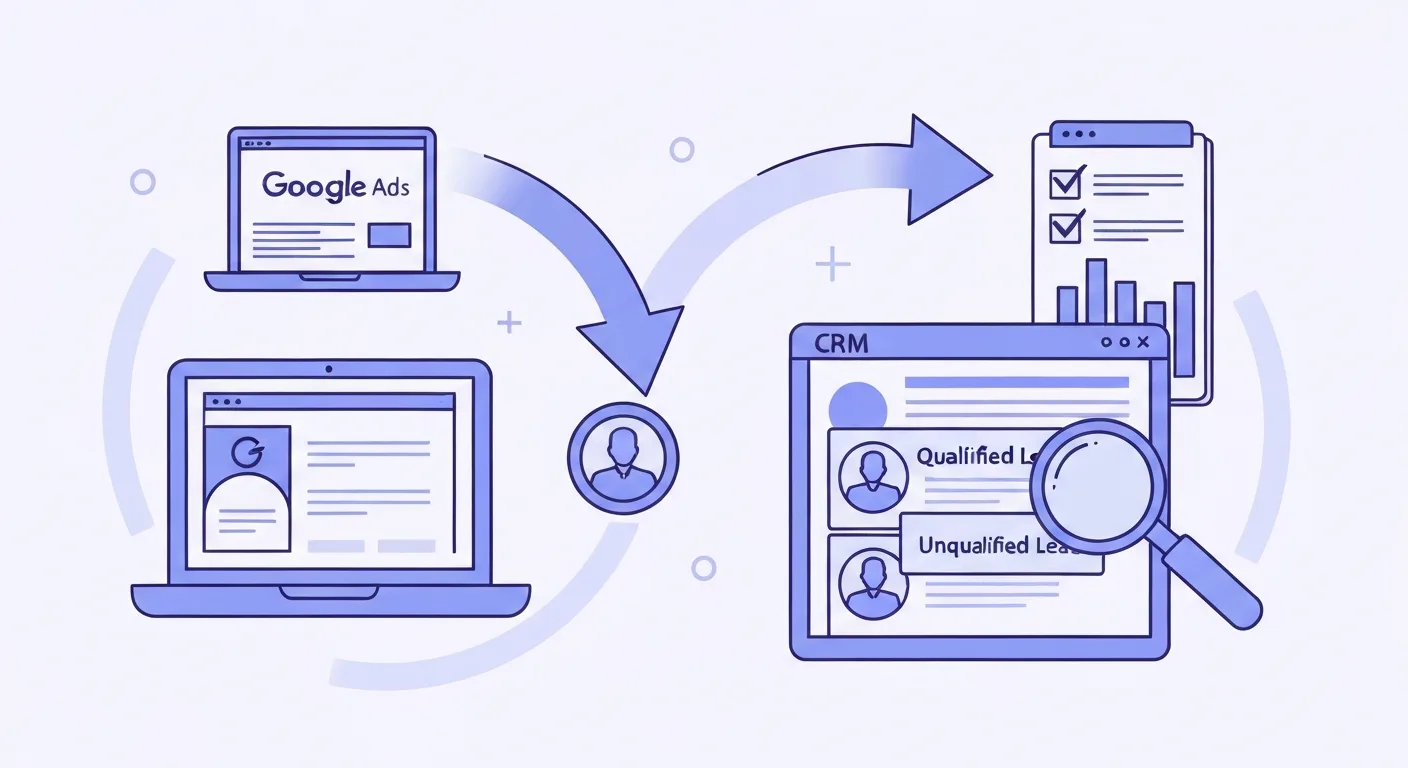
How to Get Google Ads to Send You Qualified Clients, Not Junk Leads
Professional services firms in NZ pay top dollar for Google Ads clicks. Here's the quality signal loop that makes Google AI find clients, not form-fill junk.
Real Estate Lead Generation: How It Works and What You Should Pay
A practical guide to real estate lead generation: how the funnel works, what a qualified lead is worth, and how to choose the right channel for your market.
Written by

Founder & Lead Generation Specialist
Jason Poonia is the founder of Lucid Leads, helping service businesses across New Zealand generate qualified leads through paid advertising and conversion-focused funnels. With a background in Computer Science from the University of Auckland and over 5 years of experience running lead generation campaigns, Jason has helped businesses in construction, trades, real estate, and professional services generate thousands of qualified leads. His data-driven approach combines targeted ad strategies with rapid lead qualification to deliver prospects who are ready to buy.