
Meta's New AI (Lattice) and Your Leads: What Professional Services Firms Should Do Now
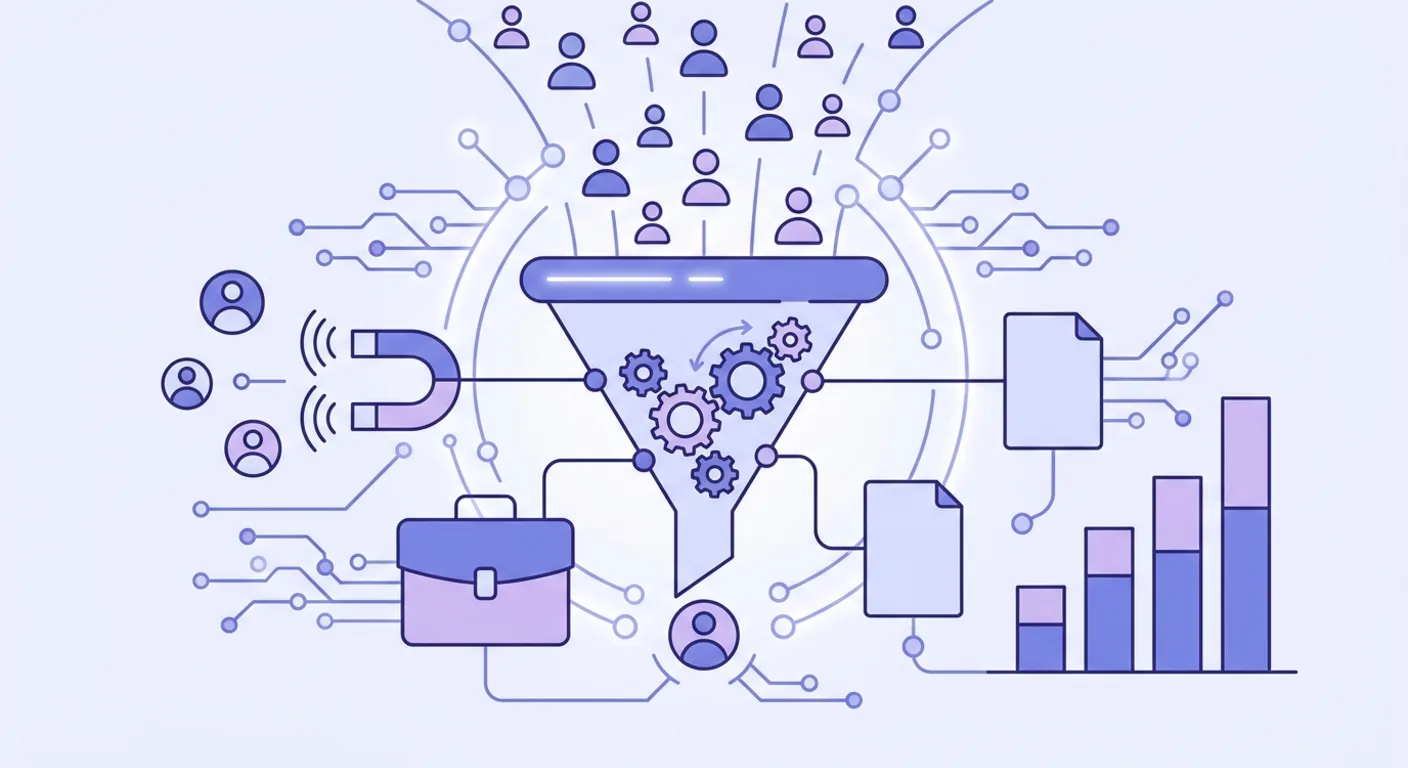
If your firm runs Meta ads for enquiries, here is the short answer: stop hyper-targeting by job title and interest, let Meta’s new AI find your buyers, and feed it your real qualifying event so it optimises for booked consults and qualified enquiries, not junk. The AI now handles the targeting. Your job is the signal, the creative and the landing page.
Meta has rolled out Lattice, a unified AI ad-ranking model that changes how leads are found and delivered. For a law firm, accountancy practice, dental or medical clinic, consultancy or financial advice business, this is not a minor update. It shifts where your effort should go. Below is what Lattice is, and the five moves that matter for professional-services lead generation right now.
What is Meta Lattice?
Lattice is Meta’s unified AI ad-ranking model. Instead of running many smaller models that each handle one objective or one placement, Meta now uses one large model that generalises across all objectives and placements at once.
The scale is the headline. Lattice is built on trillions of parameters and trained on hundreds of billions of examples. Meta reports ad quality up around 12 percent, conversions up to 6 percent higher, roughly 10 percent lifts in revenue-driving metrics, and about 20 percent capacity savings from consolidating all those separate models into one.
The part that matters most for you: Lattice is built to perform better with less granular data. In a post-privacy world where signal is scarcer, a bigger, smarter model can infer more from less. It works alongside Andromeda, which handles retrieval, and GEM, which handles recommendations, and it powers Advantage+, Meta’s automated campaign product.
Translation for a professional-services owner: the machine got a lot better at deciding who sees your ad and when. Fighting it with manual targeting is now the losing move.
What Lattice means for professional-services lead gen
Here are the five tactics, in order of impact.
1. Go broad. Let the AI find your enquiries.
The instinct in professional services is to narrow hard. Target “managing partners” or “practice owners” or a tight interest stack, because your service is specialist and your ideal client is specific.
That instinct now works against you. Lattice does the targeting better than a manual audience can, and it does it by learning from who actually converts, not from who fits a demographic label. When you box it into a narrow audience, you starve the model of the room it needs to find look-alike buyers you would never have picked manually.
The move: trust Advantage+ and open the targeting up. Give Meta a broad audience and let Lattice narrow it for you based on real conversion behaviour. You will often find the qualified enquiries come from segments you would not have targeted by hand.
This feels uncomfortable the first time. Do it anyway, and judge it on the leads, not on the audience settings.
2. Feed it the right signal so it optimises for quality, not junk
This is the single most important tactic, and it is where most professional-services firms leave money on the table.
Lattice optimises for whatever event you tell it to optimise for. If you tell it to chase form fills, it will get very good at generating form fills, including the time-wasters who never had budget or intent. Volume goes up, quality goes down, and your team burns hours on unqualified calls.
Instead, define and feed the real qualifying event. For a professional-services firm that usually means a booked consultation or a genuinely qualified enquiry, not a raw contact-form submission.
How to do it:
- Install the Meta Pixel and the Conversions API together. The Pixel captures browser-side signal, the Conversions API sends server-side signal directly from your systems. Running both closes the gaps that privacy changes and ad blockers open up, so Lattice learns from more complete data.
- Optimise for the qualifying event, not the top-of-funnel click. Point the campaign at “consultation booked” or “qualified lead”, not “lead form opened”.
- Feed offline conversions back into Meta. When a lead becomes a booked consult, a signed engagement or a paying client, send that back. This is how the model learns what a good client actually looks like, and it is how you stop paying to attract people who look interested but never convert.
Get this right and Lattice will actively hunt for people who resemble your best clients. Get it wrong and it will flood you with the cheapest, easiest clicks it can find.
3. Consolidate your campaigns for faster learning
Fragmented account structures made more sense in the old world of many small models. With Lattice, splitting your budget across a dozen tightly-themed ad sets just slows the learning down. Each fragment has to gather enough conversions on its own before it becomes reliable, and most never do.
Consolidate. Fewer campaigns, fewer ad sets, more conversion signal flowing into each one. The model learns faster when the data is pooled, and a faster-learning model spends your budget more efficiently. For most professional-services firms running a single core offer, one lean Advantage+ campaign will outperform a sprawl of narrow ones.
4. Creative is the main lever now
When the AI owns targeting and delivery, creative becomes the variable you actually control. It is where you win or lose.
For professional services, that does not mean flashy. It means credible. You are asking someone to trust you with their money, their legal position, their health or their business. The creative has to earn that trust in a few seconds.
What works:
- Credibility-led creative. Real results, client outcomes, credentials, recognisable proof. Show that you are safe hands.
- A clear, specific offer. “Book a free 20-minute strategy call” beats “Get in touch”. Name the thing you want them to do and what they get.
- Problem-solution angles. Open on the pain your client actually feels (a tax bill they did not see coming, a legal risk they are exposed to, a growth ceiling they cannot break) and show the resolution.
- Video and UGC. A straight-to-camera piece from the principal, or a genuine client sharing their experience, outperforms polished stock. It reads as real, and real converts.
Then test. Run several angles, let Lattice distribute budget to the winners, kill the losers, and keep feeding fresh creative. Creative fatigue is now your main enemy, not targeting.
5. Landing page and offer still decide the outcome
Lattice can drive the perfect click. It cannot convert it. That is on your page.
If the AI delivers a qualified prospect and your landing page is slow, vague or asks for too much too soon, you paid for a lead you will never see. The gap between a good click and a booked consult is entirely a landing-page and offer problem.
Make sure the page the ad points to matches the ad’s promise, loads fast, states the offer plainly, carries real trust signals, and makes the next step obvious and low-friction. For professional services, a simple, credible page with one clear call to action almost always beats a busy one.
Frequently asked questions
Should I turn off my detailed targeting now that Lattice exists?
For most professional-services firms, yes, loosen it considerably. Lattice targets more effectively by learning from actual conversions than from manual audience settings. Broaden the audience, feed it a strong qualifying signal, and let it find your buyers. Test broad against your existing setup and let the qualified-lead numbers decide.
Will Lattice send me more unqualified leads?
Only if you optimise for the wrong event. Lattice chases whatever you point it at. Point it at raw form fills and you get volume with more junk. Point it at booked consults or qualified enquiries, and feed offline conversions back, and it learns to find people who look like your best clients.
Do I still need the Conversions API, or is the Pixel enough?
You need both. The Pixel captures browser-side data and the Conversions API sends server-side data straight from your systems. Privacy changes and ad blockers erode Pixel-only signal, and a data-hungry model like Lattice performs better with the fuller picture both together provide.
How many campaigns should a professional-services firm run?
Fewer than you probably run today. Consolidate so more conversion signal flows into each campaign, because the model learns faster when data is pooled. For a single core offer, one lean Advantage+ campaign usually beats a spread of narrow ones.
If the AI does the targeting, what is left for me to control?
The three things that decide your results: the conversion signal you feed it, your creative, and your landing page and offer. Lattice drives the click. Whether that click becomes a client is entirely down to those three.
Get your Meta lead gen ready for Lattice
Lattice rewards firms that feed it the right signal, trust it to target, and put their effort into creative and conversion. It punishes firms still fighting it with manual audiences and chasing cheap form fills.
If you want your Meta lead generation set up to attract qualified enquiries, not time-wasters, we do exactly this for New Zealand professional-services firms. Book a strategy call with Lucid Leads and we will map out the signal, creative and landing-page changes that will move your numbers.
Ready to Generate More Leads?
Let's discuss how we can help you get 30 qualified leads in 30 days with our proven TAP System.
Book a Free Strategy CallRelated Articles
Continue learning about lead generation and paid advertising

Real Estate Lead Generation: How It Works and What You Should Pay
A practical guide to real estate lead generation: how the funnel works, what a qualified lead is worth, and how to choose the right channel for your market.

Lead Gen News: July 2026 - Google's Journey Bidding, New Lead Dashboard, and Meta's AI Creative Push
The latest in lead generation: Google's journey-aware bidding, new lead dashboard, Local Services Ads changes, DSA retirement, and Meta's AI creative push.
Written by

Founder & Lead Generation Specialist
Jason Poonia is the founder of Lucid Leads, helping service businesses across New Zealand generate qualified leads through paid advertising and conversion-focused funnels. With a background in Computer Science from the University of Auckland and over 5 years of experience running lead generation campaigns, Jason has helped businesses in construction, trades, real estate, and professional services generate thousands of qualified leads. His data-driven approach combines targeted ad strategies with rapid lead qualification to deliver prospects who are ready to buy.