
Lead Generation for Consultants in NZ: How to Build a Client Pipeline Beyond Referrals

Most consulting businesses in New Zealand generate 80 to 100 percent of their new work through referrals and word of mouth. That is not a strategy. It is a passive arrangement that happens to work most of the time, right up until the month a major referral source retires, refers less, or starts recommending someone else.
The case for building an active pipeline is straightforward: management, IT, HR, strategy, and specialist consulting businesses have structural advantages in paid and content-led lead generation that most trade businesses do not. High client lifetime value, a clearly defined buyer, and a specific set of business problems that can be targeted in search all make it possible to build a predictable pipeline. The challenge is building the funnel correctly, because the approaches that work for a trade or a clinic do not translate well to consulting.
Why Referrals Are Not Enough on Their Own
Referrals are excellent leads. They arrive with context, trust, and some degree of pre-qualification already done. The problem is supply.
You cannot turn a referral tap on when you want more work. You cannot target a referral tap at a specific industry or problem type. And when you are growing, the referral rate from your existing client base rarely keeps pace with your capacity.
The other issue is selection bias. Referrals tend to cluster around the type of work you have already done and the network of the people already in your orbit. They reinforce what you are known for today, not what you want to be known for next year. A deliberate lead generation programme lets you decide which problems you go after, which industries you build depth in, and what size of client you attract.
Referrals should remain part of the mix. They just should not be the whole thing.
The Economics Make Consulting Lead Generation Different
Before choosing a channel or writing an ad, understand why consulting lead generation behaves differently from most service industries.
The first difference is client lifetime value. A management consulting engagement might run $15,000 to $80,000. A multi-year IT advisory relationship could be worth several times that. At those values, you can afford a significantly higher cost per lead than most service businesses. Attorneys and legal services, another high-value professional category, pay an average of $131.63 per Google Ads lead, and it still makes commercial sense because each client relationship is worth far more. The same logic applies to consultants.
The second difference is volume expectations. You are not trying to fill a booking system or generate 50 enquiries a month. You might need 8 to 12 qualified conversations per month to grow the business meaningfully. That changes how you measure success and where you invest.
The third is the sales cycle. Most consulting engagements take two to eight weeks from first contact to signed agreement, sometimes longer. Your lead generation system needs to support nurturing, not just immediate conversion.
Define Your Ideal Client Before You Spend a Dollar
The most common mistake NZ consultants make in paid lead generation is advertising before they have a sharp enough definition of who they want to reach.
A generic positioning statement like “we help businesses improve performance” is useless as the basis for an advertising campaign. It gives you no guidance on what keywords to buy, what problem to speak to in your ad copy, or what your landing page should promise.
A workable ideal client profile for a consultant covers:
- Industry or sector: Where do you have genuine depth and proof of results?
- Company size: The revenue or headcount range where your work is both relevant and affordable
- Role: Who initiates the conversation? Owner, CEO, HR director, CTO, board member?
- The trigger problem: What specific situation prompts them to look for help right now?
The trigger problem is the most important element. People do not search for “management consultant.” They search for “how to reduce staff turnover in manufacturing” or “business systems before scaling headcount” or “IT infrastructure review before acquisition.” Knowing your trigger lets you write ads and content that meet buyers at the exact moment they are looking.
Google Ads for Consultants: How to Approach It
Google Ads works well for consulting businesses with a clear niche and a specific trigger problem. It works poorly for vague generalist positioning.
The right keyword strategy starts with problem-based and service-specific searches, not broad category terms. “HR consultant Auckland” will cost you clicks from students, job seekers, and researchers. “HR systems implementation small business NZ” or “workforce restructuring consultant Wellington” attracts a much narrower, higher-intent audience.
Build separate campaigns for each distinct service or problem type you solve. If you do both change management and technology implementation, these attract different buyers with different language and different intent. Mixing them into one campaign makes it harder to write relevant ads and harder to optimise performance.
The CPL reality for professional services is worth knowing before you set a budget. The WordStream and LocaliQ 2026 Google Ads benchmarks, covering over 13,000 campaigns, put the cross-industry average at $66.69 per lead. Professional and legal services consistently run above that. Budget accordingly: $2,000 to $4,000 per month gives you enough volume to learn and optimise in a niche consulting category without burning through budget before the campaign has had time to improve.
The landing page matters as much as the ad. Send traffic to a page built for one offer, not your homepage or a general services page. That page should name the problem you solve, state who you work with, and have a single clear next step: book a discovery call or download a diagnostic tool.
LinkedIn for Consulting Lead Generation
For B2B consulting, LinkedIn offers targeting precision that no other platform can match. You can reach people by job title, seniority, industry, company size, and company growth rate. A management consultant whose ideal client is the operations director of a NZ manufacturing firm with 50 to 200 employees can build a very tight audience from the start.
The two LinkedIn formats that perform well for consultants are Thought Leader Ads and Lead Gen Forms.
Thought Leader Ads run your personal content as a paid post, using your name and photo rather than a company page. For consulting businesses where the principal’s credibility is the product, this format is often more effective than branded company content. A post from you, the named expert, lands differently than a post from “Acme Consulting Ltd.”
LinkedIn Lead Gen Forms reduce friction by pre-populating fields from the member’s profile. Rather than asking someone to leave LinkedIn and fill in a contact form on your site, they submit a lightweight form without leaving the feed. The trade-off is lead commitment: Lead Gen Form leads are typically less invested than someone who navigated to your website and completed a form there. Use them for top-of-funnel offers like diagnostic tools and webinars rather than direct consultation bookings.
The targeting precision on LinkedIn justifies higher CPCs compared with broad Google searches. Paying more per click for exactly the right person is usually better economics than paying less for a large audience you then have to filter.
The Lead Magnet That Actually Works for Consultants
Most consulting firms default to whitepapers, ebooks, and thought leadership reports. These take a long time to produce and convert poorly because they require no commitment and reveal nothing about the prospect’s situation.
A diagnostic or assessment tool works significantly better, for two reasons. First, it demonstrates your thinking methodology rather than just your views. Second, it requires the prospect to answer questions about their own situation, which means you learn something useful before your first conversation.
A consulting diagnostic does not need to be complex. A five to ten question form or PDF that asks about a company’s current state in your area of expertise, then provides a scored output or recommended next step, is sufficient. Examples of what this looks like in practice:
- A change management consultant might offer a “Change Readiness Assessment” that scores how prepared a leadership team is for a major initiative
- An IT advisory firm might offer a “Technology Risk Scorecard” that identifies gaps in systems and security posture
- An HR consultant might offer a “People and Culture Benchmarking Checklist” for companies preparing to scale their headcount
The output of the diagnostic becomes the basis for your discovery call. The prospect has already told you where their gaps are. Your job is to explore the implications and scope an engagement around them.
For delivery, Typeform or a simple PDF download both work. Typeform lets you add conditional logic that routes different responses to different follow-up sequences, which is worth the setup time if you are running paid traffic at volume.
Your lead magnet should sit on a dedicated landing page built for conversion rather than a general services page. The page should describe exactly what they receive, who it is for, and what they will learn from completing it.
Building the Discovery Call Funnel
The most common call-to-action on a consulting website is “book a free consultation.” That framing attracts the wrong people and sets the wrong expectations.
A free consultation sounds like a sales pitch. People who want to compare providers but have no intention of hiring anyone will book them all day. You end up spending 45 minutes per conversation on prospects who were never going to become clients.
Rename the call. “Strategy session,” “practice assessment,” “60-minute diagnostic call,” or “growth review” all signal a working conversation with a defined agenda. Pair the renaming with a short pre-call questionnaire that asks about the prospect’s business, their current situation, and what they want to achieve in the next 12 months.
The questionnaire does three things: it confirms the lead is genuine, it filters out people who are not ready to invest in professional help, and it means you arrive at the call knowing enough to have a productive conversation. A prospect who takes five minutes to answer qualifying questions is demonstrably more serious than one who clicked “book now” with zero friction.
The landing page for your discovery call booking should:
- Name the call type and describe what happens in it
- State clearly who it is for and, if relevant, who it is not for
- List what the prospect will have at the end of the call
- Include social proof from relevant industries or business types
- Use a booking tool so the prospect can self-schedule without email back-and-forth
Keep the form short. Name, email, company name, and two or three qualifying questions is enough. Asking for a phone number is optional; many consultants find prospects more willing to book when they do not need to provide one upfront.
For a deeper look at how to handle leads once they are in your pipeline, the complete lead scoring guide for NZ service businesses covers qualification and routing in detail.
The Arithmetic: Why It Works Even at High CPL
To show how the economics stack up, consider a hypothetical consulting firm with the following characteristics. Average engagement value: $18,000. Typical close rate on qualified discovery calls: 35%. Monthly target: three new clients.
To win three clients at a 35% close rate, the firm needs about nine qualified discovery calls per month. If their conversion rate from ad click to completed enquiry is 20%, and their enquiry-to-booked-call rate is 50%, they need roughly 90 clicks per month to produce nine booked calls.
With an average CPC of $12 to $15 for specific B2B consulting keywords, that is $1,080 to $1,350 in click spend to generate nine qualified calls. At a 35% close rate, three clients at $18,000 each equals $54,000 in new revenue from roughly $1,200 in advertising spend. That ratio makes sense for almost any consulting business, even with campaign management costs on top.
The numbers shift based on your CPC, your close rate, and how effectively your funnel qualifies before the call arrives. But the underlying logic holds: high-value services can absorb higher cost per lead and still generate strong returns. The thing that breaks the model is poor lead quality flowing into an unprepared conversion process. That is a funnel problem, not an advertising problem.
What Most NZ Consulting Firms Get Wrong
A few patterns appear repeatedly in consulting businesses that are not seeing results from paid lead generation.
Trying to sell before building trust. Consulting buyers do not buy after one ad impression and one form fill. They buy after they have read your thinking, seen evidence of your results, and decided you understand their situation. Ads that go straight to “book a call” without any trust-building step in between convert poorly.
Positioning too broadly. “We help businesses grow” is not a position. It is an invitation for every prospect to assume you are not quite right for them specifically. The narrower your positioning, the more your ads resonate with the right people, and the easier it is to write landing page copy that speaks directly to their situation.
Sending ad traffic to the homepage. Your homepage is built to do many things at once. A dedicated landing page built for a single audience and a single offer converts significantly better. The anatomy of a high-converting lead generation funnel explains exactly why this matters.
Measuring the wrong conversion event. Tracking form submissions as your primary conversion goal trains Google Ads to find people who fill out forms, not people who become clients. Tracking booked discovery calls instead, then feeding those signals back to Smart Bidding, typically improves lead quality meaningfully over four to eight weeks.
Ready to Build a Consistent Pipeline?
Consulting businesses that build a deliberate lead generation system alongside their referral network grow faster and are far less exposed to quiet patches. Getting the funnel structure right before scaling spend is the work that makes the difference.
If you run a professional services or consulting business in New Zealand and want a pipeline that works consistently, book a free strategy call with Lucid Leads. We work specifically with service businesses and understand the longer sales cycles, the qualification challenges, and the positioning work that makes paid lead generation profitable for consulting firms.
Frequently Asked Questions
How long does Google Ads take to generate consulting leads?
Google Ads can deliver enquiries in the first week after launch, but early leads are often lower quality while the campaign is in its learning phase. Expect four to eight weeks before you have a reliable read on cost per lead and lead quality. LinkedIn typically takes longer to optimise but tends to deliver more accurate targeting from the start.
Should a consultant use Google Ads or LinkedIn?
It depends on whether your buyers search for help on Google or spend time on LinkedIn. Most B2B consultants find LinkedIn more efficient for reaching a specific job title or company type, while Google works well when buyers are actively searching for a solution to a named problem. Running both at modest budgets and comparing results after 60 days is usually the fastest way to answer the question for your specific practice.
How much should a consulting firm spend on lead generation?
A starting budget of $2,000 to $3,000 per month in ad spend gives you enough data to learn and optimise without committing heavily before you understand your cost per lead. Add campaign management fees on top of that. Once you have validated the channel and improved your funnel, scaling spend is straightforward.
Do I need a separate landing page for each service?
Yes. Each distinct service should have its own landing page matched to the specific ad or search term sending traffic to it. A single generic page asking people to “get in touch” underperforms a focused page that addresses a specific problem and offers a specific, named next step.
What makes a consulting lead magnet convert well?
Specificity and relevance. A diagnostic or assessment tool that speaks directly to a problem your ideal client is dealing with right now outperforms any general guide or industry report. The best lead magnets make the prospect feel understood. When someone completes a diagnostic and thinks “this describes our situation exactly,” the conversion from download to booked discovery call increases significantly.
Related Articles
Continue learning about lead generation and paid advertising
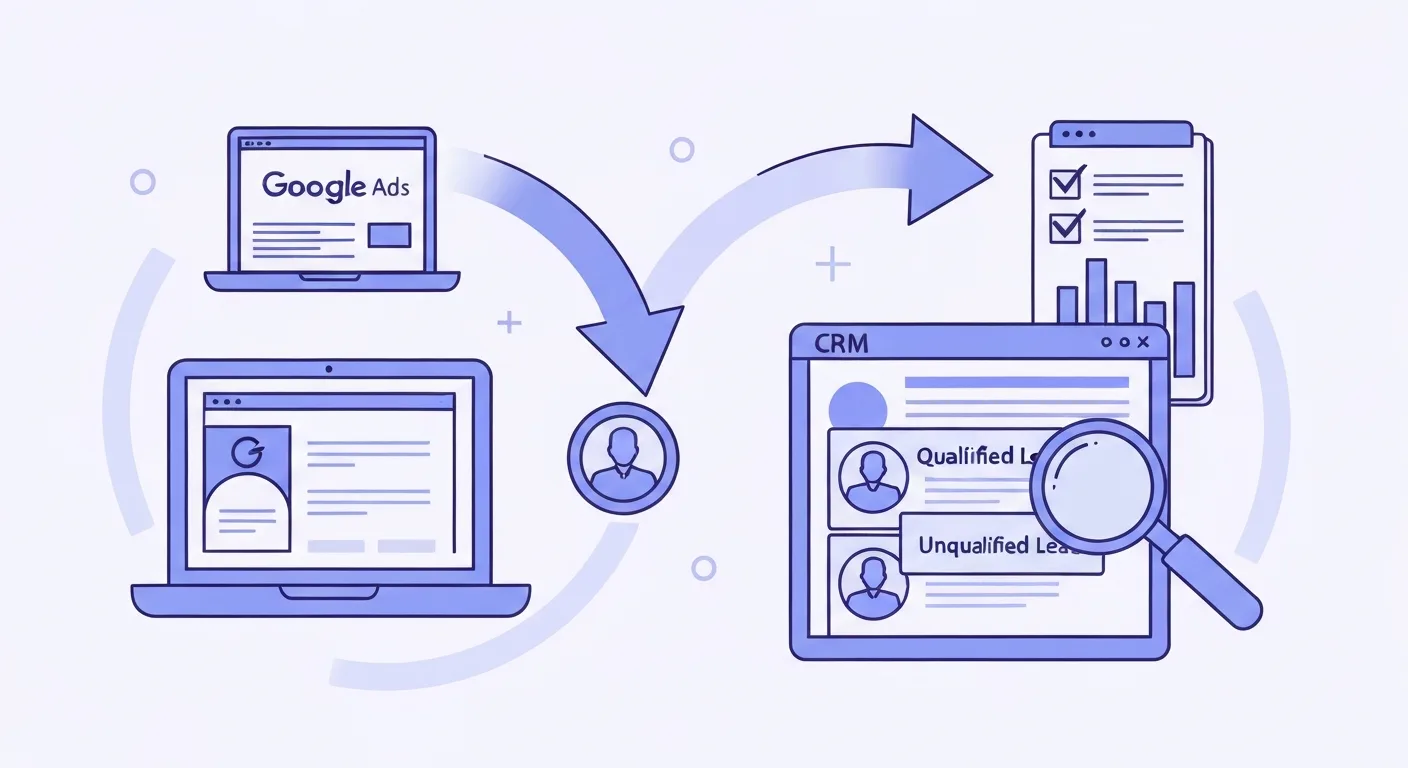
How to Get Google Ads to Send You Qualified Clients, Not Junk Leads
Professional services firms in NZ pay top dollar for Google Ads clicks. Here's the quality signal loop that makes Google AI find clients, not form-fill junk.
Meta's New AI (Lattice) and Your Leads: What Professional Services Firms Should Do Now
Meta's new AI, Lattice, changes lead gen for NZ professional services firms. Stop hyper-targeting, feed the right signal, and win on creative. Here's how.
Written by

Founder & Lead Generation Specialist
Jason Poonia is the founder of Lucid Leads, helping service businesses across New Zealand generate qualified leads through paid advertising and conversion-focused funnels. With a background in Computer Science from the University of Auckland and over 5 years of experience running lead generation campaigns, Jason has helped businesses in construction, trades, real estate, and professional services generate thousands of qualified leads. His data-driven approach combines targeted ad strategies with rapid lead qualification to deliver prospects who are ready to buy.