
Lead Forms vs Landing Pages: Which Converts Better?

The Great Conversion Debate
When running lead generation campaigns on platforms like Facebook, Instagram, or LinkedIn, you face a critical choice: should you send traffic to your website landing page, or use the platform’s native lead forms?
This decision significantly impacts your conversion rates, lead quality, and cost per lead. Yet many advertisers make this choice based on convenience rather than strategy.
This guide examines both approaches in depth, helping you understand when each excels and how to optimise whichever you choose.
Understanding the Options
Native Lead Forms (Instant Forms)
Native lead forms keep users within the advertising platform. When someone clicks your ad, a pre-populated form appears without them leaving Facebook, Instagram, LinkedIn, or Google.
How they work:
- User clicks your ad
- Form appears within the app
- Many fields auto-populate from profile data
- User submits without visiting your website
- Lead is delivered to your CRM or downloaded
Landing Pages
Landing pages direct users to your website where they complete a form you’ve built and hosted yourself.
How they work:
- User clicks your ad
- Browser opens your website landing page
- User reads your content and offer
- User manually fills out your form
- Lead is captured in your system
Conversion Rate Comparison
Let’s examine what the data typically shows:
Native Lead Forms
Average conversion rates for well-optimised native forms:
- Facebook/Instagram Lead Ads: 8-15%
- LinkedIn Lead Gen Forms: 5-12%
- Google Lead Form Extensions: 3-8%
These rates can be significantly higher because:
- No friction from page loads
- Pre-populated fields reduce effort
- Users stay in familiar environment
- Mobile experience is seamless
Landing Pages
Average conversion rates for optimised landing pages:
- General landing pages: 2-5%
- Highly optimised pages: 5-10%
- Exceptional performers: 10%+
Landing page rates are typically lower due to:
- Load time friction
- Additional steps required
- Unfamiliar environment
- Manual form completion
Raw Numbers Favour Lead Forms
On pure conversion rate, native lead forms typically outperform landing pages by 50-100%. But conversion rate isn’t the whole story.
Lead Quality Comparison
Higher conversion rates don’t always mean better results. Lead quality matters enormously.
Lead Form Quality Challenges
Native lead forms often produce lower quality leads because:
Minimal friction filters out unqualified leads People submit forms with little thought or commitment. The ease that drives high conversion rates also lets through uninterested or unqualified prospects.
Auto-populated data may be outdated Email addresses and phone numbers from user profiles might be old or rarely checked.
Less context about your offer Users may not fully understand what they’re signing up for, leading to confusion when you follow up.
Accidental submissions Easy one-tap submissions mean some leads are mistakes.
Landing Page Quality Advantages
Landing pages typically produce higher quality leads because:
Additional friction acts as a filter Someone willing to click through, wait for load, read content, and manually complete a form has demonstrated meaningful interest.
Full information delivery Your landing page can thoroughly explain your offer, qualifications, process, and value proposition.
Intentional submissions Manual form completion requires deliberate action and attention.
Better data accuracy Manually entered information is often more current and accurate.
Cost Per Lead Analysis
Cost per lead (CPL) depends on both cost per click and conversion rate.
Lead Form Economics
Native forms typically deliver:
- Higher conversion rates
- Lower cost per lead
- Higher volume of leads
Example calculation:
- 1,000 clicks at $3 each = $3,000
- 12% conversion rate = 120 leads
- CPL = $25
Landing Page Economics
Landing pages typically deliver:
- Lower conversion rates
- Higher cost per lead
- Lower volume of leads
Example calculation:
- 1,000 clicks at $3 each = $3,000
- 5% conversion rate = 50 leads
- CPL = $60
But Quality Changes the Equation
If we factor in lead quality:
Lead forms:
- 120 leads at $25 each
- 30% qualified rate = 36 qualified leads
- Cost per qualified lead = $83
Landing pages:
- 50 leads at $60 each
- 60% qualified rate = 30 qualified leads
- Cost per qualified lead = $100
The gap narrows significantly when quality is considered. In some cases, landing pages actually deliver lower cost per qualified lead despite higher CPL.
When to Use Native Lead Forms
Lead forms excel in specific situations:
1. Mobile-Heavy Audiences
Mobile users face significant friction with landing pages—slower load times, smaller screens, harder form completion. Lead forms eliminate these barriers.
Best for: Consumer products, local services, impulse-driven offers.
2. Simple, Clear Offers
When your offer is immediately understandable and requires no explanation, lead forms work well.
Best for: Contests, free trials, simple consultations, downloadable content.
3. Volume-Based Goals
If you need high lead volume and have capacity to qualify leads afterward, lead forms maximise numbers.
Best for: Large sales teams, lead qualification processes, broad awareness campaigns.
4. Top-of-Funnel Campaigns
For building email lists or newsletter subscribers where commitment is low, lead forms are appropriate.
Best for: Content marketing, newsletter sign-ups, webinar registrations.
5. Testing and Validation
When testing offers or audiences, lead forms provide faster data due to higher conversion rates.
Best for: New campaign validation, offer testing, audience research.
When to Use Landing Pages
Landing pages excel in different situations:
1. Complex or High-Value Offers
When your service requires explanation, addresses specific problems, or represents significant commitment, landing pages let you make your case.
Best for: Professional services, B2B solutions, considered purchases.
2. Quality Over Quantity Goals
If your sales team can only handle limited leads, landing page friction helps ensure those leads are worthwhile.
Best for: High-touch sales processes, limited capacity businesses, premium services.
3. Building Trust and Credibility
Landing pages can include testimonials, case studies, credentials, and trust signals that build confidence.
Best for: New brands, competitive markets, trust-sensitive industries.
4. Tracking and Analytics
Website landing pages provide richer analytics data—time on page, scroll depth, heat maps—that inform optimisation.
Best for: Data-driven marketers, continuous improvement programmes.
5. Remarketing Opportunities
Website visitors can be remarketed; lead form interactions cannot (as easily). Landing pages feed your remarketing audiences.
Best for: Full-funnel marketing strategies, long sales cycles.
Optimising Native Lead Forms
If you choose lead forms, maximise quality with these tactics:
Add Context Before the Form
Use the intro screen to explain your offer clearly. Set expectations about what happens after submission.
Use Higher-Intent Questions
Add qualifying questions that require thought, like “What’s your biggest challenge?” or “When are you looking to start?”
Require Manual Entry for Key Fields
Don’t auto-populate critical fields. Making users type their email improves accuracy and filters casual submissions.
Include a Review Screen
Adding a confirmation step before submission reduces accidental completions.
Follow Up Immediately
Lead form leads go cold quickly. Contact within minutes, not hours or days.
Integrate with Your CRM
Automatic CRM integration ensures leads are actioned immediately rather than sitting in a platform export.
Optimising Landing Pages
If you choose landing pages, maximise conversion with these tactics:
Speed Is Critical
Every second of load time costs conversions. Optimise for mobile-first, fast-loading pages.
Match Message to Ad
The landing page should deliver exactly what the ad promised. Consistency builds trust and reduces bounce rates.
Simplify Your Form
Every additional field reduces conversions. Ask only for what you truly need.
Use Social Proof
Testimonials, reviews, and case studies significantly impact conversion, especially for unfamiliar brands.
Clear Call to Action
One page, one goal, one obvious next step. Remove distractions and competing options.
Mobile Optimisation
Test thoroughly on mobile devices. Most social media traffic is mobile.
Hybrid Approaches
You don’t have to choose exclusively. Consider these combinations:
Lead Form to Landing Page Flow
Use lead forms to capture initial interest, then redirect completers to a landing page with more information.
Benefit: High conversion rates plus opportunity to educate and qualify.
Landing Page with Embedded Lead Form
Some platforms allow embedding platform-style forms on your landing page, combining benefits of both.
Benefit: Landing page context with lead form convenience.
Audience-Based Selection
Use lead forms for cold prospecting audiences, landing pages for retargeting warmer audiences.
Benefit: Matches approach to audience temperature and intent level.
Testing-Based Selection
Run both approaches, measure cost per qualified lead (not just CPL), and let data decide.
Benefit: Evidence-based optimisation for your specific situation.
Measuring What Matters
However you approach this, measure beyond surface metrics:
Metrics That Mislead
- Conversion rate alone
- Cost per lead alone
- Lead volume alone
Metrics That Matter
- Cost per qualified lead
- Lead-to-opportunity rate
- Cost per customer acquired
- Customer lifetime value by source
Track leads through your sales process to understand true quality differences between approaches.
Platform-Specific Considerations
Facebook/Instagram
- Lead forms work exceptionally well on mobile
- Higher volume, lower quality is typical
- Instant forms now include more customisation options
- Higher cost per click makes conversion rate more important
- Professional audience may tolerate landing page friction better
- Lead quality from forms is generally better than other platforms
- Lead form extensions work for search and YouTube
- Landing pages allow better quality score optimisation
- Search intent often supports landing page approach
Making Your Decision
Consider these questions:
- What’s your lead capacity? Limited capacity favours landing pages.
- How complex is your offer? Complex offers need landing page explanation.
- What’s your audience’s device mix? Mobile-heavy audiences favour lead forms.
- How fast can you follow up? Fast follow-up maximises lead form quality.
- What’s your risk tolerance? Lead forms are lower risk to test.
Conclusion
There’s no universal answer to the lead forms versus landing pages question. Lead forms typically generate more leads at lower cost; landing pages typically generate better quality leads.
The right choice depends on your specific business model, sales process, capacity, and goals. In many cases, testing both and measuring cost per qualified lead (not just cost per lead) reveals the optimal approach for your situation.
Whatever you choose, optimise relentlessly. Small improvements in conversion rate or lead quality compound into significant performance gains over time.
Need help optimising your lead generation approach? Lucid Leads can help you test and implement the strategy that delivers the best results for your business. Contact us to discuss your goals.
Ready to Generate More Leads?
Let's discuss how we can help you get 30 qualified leads in 30 days with our proven TAP System.
Book a Free Strategy CallRelated Articles
Continue learning about lead generation and paid advertising
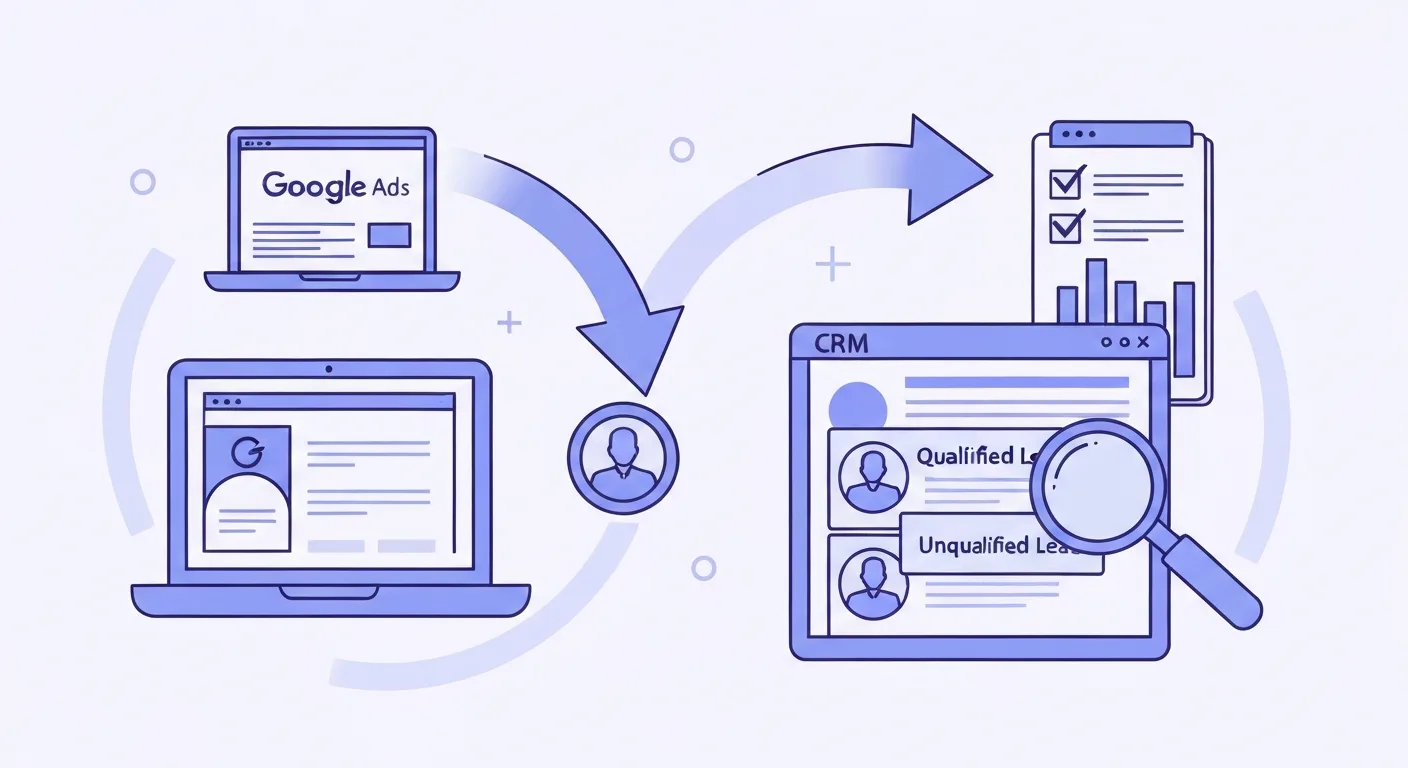
How to Get Google Ads to Send You Qualified Clients, Not Junk Leads
Professional services firms in NZ pay top dollar for Google Ads clicks. Here's the quality signal loop that makes Google AI find clients, not form-fill junk.

Real Estate Lead Generation: How It Works and What You Should Pay
A practical guide to real estate lead generation: how the funnel works, what a qualified lead is worth, and how to choose the right channel for your market.
Written by

Founder & Lead Generation Specialist
Jason Poonia is the founder of Lucid Leads, helping service businesses across New Zealand generate qualified leads through paid advertising and conversion-focused funnels. With a background in Computer Science from the University of Auckland and over 5 years of experience running lead generation campaigns, Jason has helped businesses in construction, trades, real estate, and professional services generate thousands of qualified leads. His data-driven approach combines targeted ad strategies with rapid lead qualification to deliver prospects who are ready to buy.