
The City and Service Landing Page Playbook for Local Lead Gen
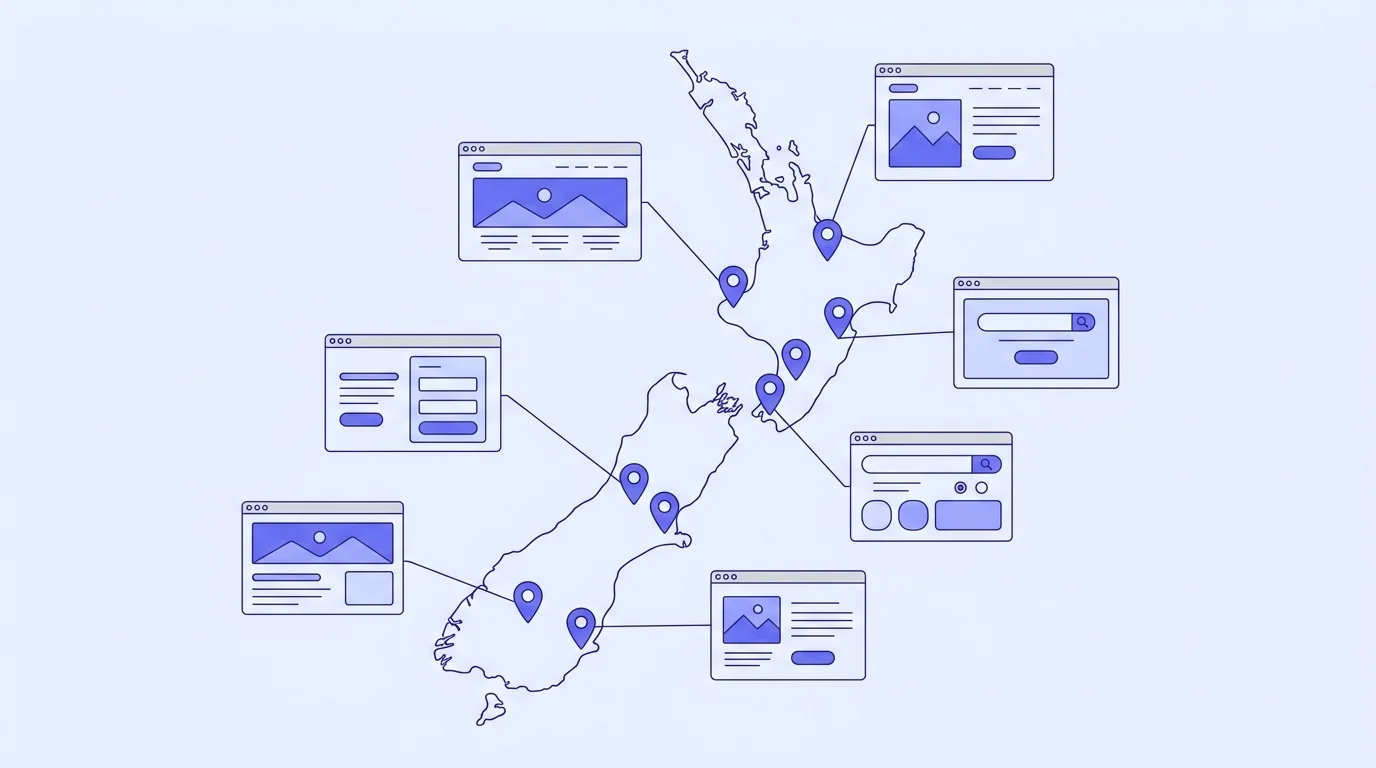
Here is a pattern we see again and again. A service business runs Google Ads for half a dozen suburbs and a handful of services, then sends every one of those clicks to the same homepage. The ads are fine. The targeting is fine. The conversion rate is terrible, and the owner blames Google.
The real problem is the destination. The businesses that quietly dominate local lead generation do something specific: they build a dedicated page for each service in each location. We call it the city and service matrix, and it is one of the most reliable ways to turn local ad clicks into booked jobs.
Why one homepage cannot win local
The golden rule of paid traffic is that the search, the ad, and the landing page all have to match. When someone searches “emergency plumber Hamilton”, clicks an ad that says “Emergency Plumber Hamilton”, and lands on a generic homepage that talks about waterline replacement and your company history, they bounce. The promise was specific. The page was not.
When that same searcher lands on a page headed “Trusted Emergency Plumbers in Hamilton” with local proof and a simple way to get in touch, they enquire. Nothing changed about the ad spend. Everything changed about the match.
The matrix: service by location
The playbook is a simple grid. Down one side you list your services. Across the top you list the locations you serve. Each cell where they meet becomes its own landing page.
For a plumber that might look like:
- Emergency plumbing in Auckland, Hamilton, Tauranga
- Blocked drains in Auckland, Hamilton, Tauranga
- Hot water repairs in Auckland, Hamilton, Tauranga
Each page leads with the exact service and location in the headline, so it matches the search that brought the visitor there. Multiply a handful of services by the towns and suburbs you actually serve and you quickly have a focused set of pages, each one speaking directly to a specific searcher.
Do not build pages where there is no demand
This is the part most people get wrong, so it is worth stressing. The matrix only works where there is real search demand.
“Emergency plumbing Auckland” has plenty of monthly searches. “Emergency plumbing” in a tiny outlying suburb might have almost none. Building hundreds of pages for areas nobody searches does not help you, it spreads your effort thin and clutters your site with pages that will never earn a visit.
Before you build, check the search volume for each service and location combination in Google’s free Keyword Planner, and only create pages where people are genuinely looking. A smaller set of pages aimed at real demand beats a sprawling set aimed at wishful thinking. Our guide to choosing keywords that convert walks through exactly how to read that data.
What each page actually needs
A location page is not just your homepage with the town name swapped in. To convert, and to be genuinely useful rather than thin, each page should carry message match the whole way through:
- A headline that matches the search, with the service and location front and centre.
- Local proof: reviews, recent jobs, or results from that area, so the visitor believes you actually work there.
- The specific service explained plainly, not a catch-all list.
- One clear action, usually a short enquiry form or a tap-to-call, with nothing competing for attention.
And the match should not stop at the page. The strongest setups keep it consistent all the way through: search, ad, landing page, the confirmation email, and the sales call all say the same thing. Every break in that chain costs you conversions. For the elements that lift conversion most, see our breakdown of the seven landing page elements that triple conversion rates.
This is how we build location pages
If you have looked around our own site, you will have seen this approach in action. We build a dedicated page for each service and location we work across, rather than funnelling everyone to a single page. It is more work up front, and it is the difference between paying for clicks that bounce and earning enquiries that book.
The same structure powers the landing pages we build for clients, each one tied to the search intent it is meant to capture.
Tie the pages to your Google Ads structure
The matrix really pays off when it lines up with your ad account. Each landing page becomes the destination for the matching, tightly themed ad group, so the keyword, the ad, and the page all agree. That tight relevance lifts your Quality Score, and a higher Quality Score means cheaper clicks for the same position. You are rewarded twice: better conversion on the page, and a lower cost to get there. That is the core idea behind how we structure paid ads, and you can read more on matching ads to intent in our guide to advanced location targeting.
Build for the searcher, not for yourself
Local lead generation is won by relevance. Match the page to the exact service and place the person searched for, build only where there is demand, and keep the message consistent from the first click to the sales call.
Want a location page structure mapped for your services and towns? Book a free strategy call and we will sketch the matrix that fits your business.
Frequently asked questions
How many landing pages do I need?
As many as you have real service and location combinations with genuine search demand, and no more. For many service businesses that is a focused set of high-intent pages rather than hundreds. Quality and relevance beat volume every time.
Isn’t this just duplicate content?
Only if you build it lazily. Pages that simply swap the town name with no genuine local detail are thin and unhelpful. Pages with real local proof, specific service information, and content that actually serves the searcher are differentiated and valuable. Build the useful version.
Do I need a page for every suburb?
No. Build pages for the areas with real search demand. Tiny suburbs with almost no searches do not justify their own page, and trying to cover every one of them dilutes your effort. Check the volume first.
Will Google penalise me for lots of similar pages?
Google rewards helpful, relevant pages and ignores or suppresses thin, near-identical ones. The risk is not the number of pages, it is whether each one genuinely helps the person who lands on it. Build for real demand with real local content and you are on the right side of that line.
Related Articles
Continue learning about lead generation and paid advertising

Landing Pages That Turn Google Ads Clicks Into Booked Jobs
Perfect keywords mean nothing if the page does not convert. Here are the landing page elements that turn NZ Google Ads clicks into booked jobs and real enquiries.

The Keyword Mistake That Burns NZ Service Businesses' Ad Budget
Wasted Google Ads spend usually comes from the wrong keywords and match types. Here is how NZ service businesses pick keywords that turn into paying customers.
Written by

Founder & Lead Generation Specialist
Jason Poonia is the founder of Lucid Leads, helping service businesses across New Zealand generate qualified leads through paid advertising and conversion-focused funnels. With a background in Computer Science from the University of Auckland and over 5 years of experience running lead generation campaigns, Jason has helped businesses in construction, trades, real estate, and professional services generate thousands of qualified leads. His data-driven approach combines targeted ad strategies with rapid lead qualification to deliver prospects who are ready to buy.