
The 3-Line Static Ad That's Quietly Outperforming Your Video Ads
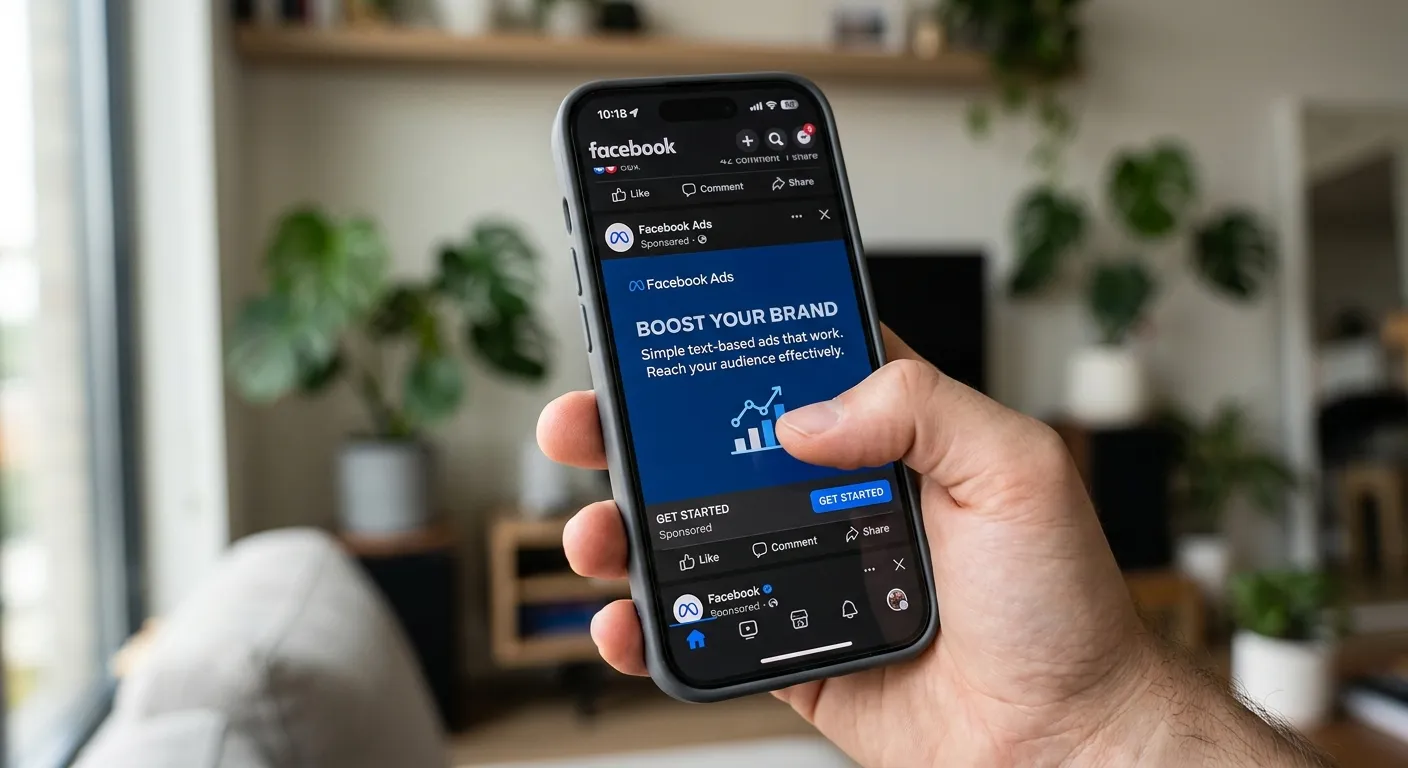
Most service businesses overthink their first ad.
They want a polished video, a perfect script, a professional shoot. They spend two weeks producing a single piece of creative before they even know if the angle works. By the time it goes live, they have already burned half a month and a chunk of budget on something that might flop for reasons they cannot diagnose.
There is a much simpler format winning right now, and it is the same one Alex Hormozi has been running for years. Three lines on a plain background. No fancy design. No production budget. No clever copy. And when you run it correctly, it outperforms almost every video ad your agency is trying to sell you.
Here is exactly what it looks like, why it works in 2026, and how to test it this week.
The format: three things on a card
The ad is brutally simple. A flat background colour and three pieces of text:
- A specific ICP callout. Who this is for.
- A specific situation they are in. What is happening in their business right now.
- A specific offer. What you are giving them.
That is the entire ad.
A real example looks like this:
“If you own a real estate brokerage doing $1M+ a year, we made this Scaling Roadmap for you.”
ICP: real estate brokerage owners. Situation: doing over $1M a year. Offer: a free Scaling Roadmap.
No headline above it. No subhead beneath it. No “swipe up” or “limited time”. Just one sentence on a dark blue card. That is the whole creative.
The first time you see this, your instinct is that it cannot possibly work. It looks like something you would throw together in Canva on a coffee break. That is precisely why it does work.
Why it works so well right now
Meta’s Andromeda update changed the targeting game more than most marketers realise. Andromeda is the AI delivery engine that decides who sees your ad, and it does not just rely on interests, lookalikes, or audience signals anymore. It reads the actual creative. The text. The visual. The context.
When you put “real estate brokerage owner doing $1M a year” on a card, Meta understands that exact phrase, scans its graph for people who match that description, and serves the ad to them. The targeting is built into the creative.
The result is that when the right person scrolls past, the ad does not feel like an ad. It feels like someone made it specifically for them. And that is the entire game in 2026. Relevance is the only thing that beats the scroll.
For more on how Andromeda changed Meta delivery, see our Meta Andromeda guide.
Why this format beats video for the first test
Video ads have at least a dozen variables that can sink a campaign.
Your environment. Your outfit. Your energy on the day you filmed. Your tonality. The hook in the first three seconds. The pacing. The B-roll. The text overlay. The thumbnail frame. Whether you smiled at the right moment.
If a video ad flops, you have no idea which of those killed it. You might shoot a second version, fix the one thing you suspect, and watch it flop for a completely different reason. That is how three weeks of testing produces zero learnings.
Static three-line ads remove almost all of that noise. There are only three things to test:
- The ICP callout
- The situation
- The offer
When something does not work, you know exactly why. When something does work, you know exactly what to scale. That clarity is worth more than any production value you can buy.
The testing framework: 10 to 15 variations
This is where most people get it wrong. They make one static ad, run it for a week, and conclude the format does not work. That is not testing. That is gambling.
Here is the framework that actually finds winners.
Step 1: Build 10 to 15 variations of the same format.
Same background colour. Same font. Same layout. The only thing that changes is the wording. Different ICPs, different situations, different offers.
For example, a lead generation agency might test:
“If you own a mortgage brokerage doing $2M+ a year, we built this Calendar Filling Playbook for you.”
“If you run a commercial cleaning company in Auckland, this is the campaign that booked our last client 47 jobs in 30 days.”
“If you own a dental practice and your new patient flow has flatlined, here is the exact ad we used to fix that for a client in Hamilton.”
Each one tests a different angle. Same skeleton, different muscles.
Step 2: Run them all at the same time.
Put them in a single ad set with a small daily budget and let Meta decide what to spend on what. Andromeda is very good at this. Within 48 to 72 hours, you will see two or three pulling traction and the rest fading. That is your signal.
Step 3: Pour spend behind the winner.
Once you find the variation that is producing leads at a price you are happy with, duplicate it into its own ad set and scale the budget. You can now also build video, carousel, and UGC versions of that same angle, because you know the angle works.
We have never run this framework for a service business and not found a winner inside the first batch. The hit rate is too good when the format is this clean.
For a deeper look at hook patterns you can use inside this format, see our guide on ad hooks that book sales calls.
NZ examples you can copy
To make this concrete, here are five three-line static ads written for New Zealand service businesses.
Mortgage broker:
“If you are a Kiwi homeowner rolling off a fixed rate in the next 6 months, we built this Re-Fix Checklist for you.”
HVAC company:
“If you own a commercial building in Auckland and your last winter power bill made you wince, this is the audit we run for our clients.”
Accountant:
“If you own a tradie business doing over $500K a year and your tax bill keeps surprising you, we made this Cashflow Planner for you.”
Dental practice:
“If you live in Tauranga and have been avoiding the dentist for more than two years, this is the exact check-up package we made for you.”
Lead generation agency:
“If you run a NZ service business burning more than $5K a month on ads with no lead tracking, we will audit it for you for free.”
Notice the pattern. Each one is specific enough that the wrong person will scroll past, and the right person will feel like the ad was written about them personally. That is the goal. You are not trying to be relevant to everyone. You are trying to be undeniably relevant to one person.
When to graduate to video
Once you find a winning angle, you have earned the right to spend real money producing video. But not before.
The mistake is producing the video first and then trying to figure out what angle works. You have it backwards. Static finds the angle. Video scales the angle.
When you do move to video, you already know exactly what to say in the first three seconds, because the static ad already told you the ICP, the situation, and the offer that resonated. The script writes itself.
This is also when carousel ads, UGC, and longer-form creative become useful. They are extensions of a proven angle, not blind shots in the dark.
Common mistakes that kill the format
This format is forgiving, but there are still ways to mess it up.
The ICP is too broad. “Small business owners” is not an ICP. “Owners of NZ trade businesses doing $1M+ a year with two or more vans on the road” is an ICP. The narrower you go, the more relevant the ad feels.
The situation is generic. “Struggling to scale” is generic. “Hitting the same revenue ceiling every quarter” is specific. The situation should sound like something the reader has actually said to themselves in the last 30 days.
The offer is vague. “Learn more” and “get a free consultation” are vague. “Free Scaling Roadmap”, “Cashflow Planner”, “47-Lead Case Study” are specific. Name the thing. Make it sound tangible.
Too much copy on the card. If the reader has to squint, you have lost. One sentence. Maybe two. Bold the ICP and the situation so the eye lands where it needs to.
Inconsistent format across variations. If every variation has a different background colour, font, and layout, you are no longer testing the angle. You are testing the design. Keep the skeleton identical.
The bottom line
You can spend the next two weeks producing a polished video ad you hope will work.
Or you can spend one afternoon writing 10 to 15 static cards, run them tomorrow, and have a winner inside a week.
The format is not new. It is not clever. It is not sexy. It just works, and it works better now than it has in years, because Meta’s delivery has finally caught up to what the creative is telling it.
Start here. Find your winner. Then build on top of it.
If you want our team to handle the static ad design for your business and make sure the ICP callouts and offer angles are sharp enough to actually convert, book a strategy call here. We will write the variations with you and have the ads live inside the week.
And no, we are not going to try to sell you a course.
Frequently asked questions
What is a three-line static ad?
A three-line static ad is a Meta ad with a flat background and one sentence containing three elements: a specific ICP callout, a specific situation that ICP is in, and a specific offer. The format relies on text-based targeting clarity rather than design or production value.
Why does Meta’s Andromeda update make static ads work better?
Andromeda reads the text inside your creative and uses it to find the exact audience the ad describes. When your ICP, situation, and offer are written into the image itself, Meta’s delivery engine matches the ad to people who fit that description with high accuracy, often outperforming manual interest stacking or lookalike audiences.
How many static ad variations should I test?
Test 10 to 15 variations in a single ad set. Keep the format identical across all of them and change only the ICP, situation, and offer. Run them for 48 to 72 hours on a modest daily budget, then scale spend behind the two or three that produce leads at a viable cost.
Are static ads better than video ads for lead generation?
For the first round of testing, yes. Static ads isolate the angle, which is the only variable that actually matters at the beginning. Once you find a winning angle, video, carousel, and UGC formats become useful for scaling that angle. The mistake is producing video before you know what to say.
What is the best aspect ratio for a Meta static image ad?
Vertical 4:5 is the recommended aspect ratio for Meta feed placements. It uses the most screen real estate on mobile, which is where the majority of your audience will see the ad. For Stories and Reels placements, use 9:16.
How much budget do I need to test 15 static ads?
You can find a winner inside a $20 to $50 daily budget for most NZ service businesses. The goal of the first 72 hours is not to scale, it is to identify which angle gets traction. Once you have that, scaling spend behind the winner is a much safer bet than scaling blindly across all variations.
Related reads
Ready to Generate More Leads?
Let's discuss how we can help you get 30 qualified leads in 30 days with our proven TAP System.
Book a Free Strategy CallRelated Articles
Continue learning about lead generation and paid advertising

The 36-Creative Framework That Beat the Algorithm (4 Angles × 3 Formats × 3 Hooks)
A systematic creative testing framework responsible for $4 million in ad winners. 36 unique creatives from one product. Stop guessing. Start winning.

Real Estate Lead Generation: How It Works and What You Should Pay
A practical guide to real estate lead generation: how the funnel works, what a qualified lead is worth, and how to choose the right channel for your market.
Written by

Founder & Lead Generation Specialist
Jason Poonia is the founder of Lucid Leads, helping service businesses across New Zealand generate qualified leads through paid advertising and conversion-focused funnels. With a background in Computer Science from the University of Auckland and over 5 years of experience running lead generation campaigns, Jason has helped businesses in construction, trades, real estate, and professional services generate thousands of qualified leads. His data-driven approach combines targeted ad strategies with rapid lead qualification to deliver prospects who are ready to buy.