Google Ads vs SEO: Which Delivers Faster ROI?

The Speed vs Sustainability Trade-Off
When businesses want to generate leads from Google, they face a fundamental choice: pay for immediate visibility through Google Ads, or invest in organic rankings through SEO. Both approaches can deliver excellent returns, but they operate on vastly different timelines.
Understanding this trade-off is crucial for making informed marketing decisions. This guide breaks down how Google Ads and SEO compare on speed to ROI, helping you choose the right approach—or combination of approaches—for your situation.
Understanding the Core Difference
Before comparing timelines, let’s clarify what each approach involves:
Google Ads (Pay-Per-Click)
Google Ads places your business at the top of search results immediately—for a price. You bid on keywords relevant to your business, and pay each time someone clicks your ad.
How it works:
- Create campaigns targeting specific keywords
- Write ads and set landing pages
- Set budgets and bidding strategies
- Pay per click (or per conversion in some cases)
- Adjust and optimise based on performance data
SEO (Search Engine Optimisation)
SEO improves your website’s organic rankings so you appear in unpaid search results. It involves optimising your site’s content, structure, and authority.
How it works:
- Research keywords and search intent
- Create and optimise content
- Improve technical website factors
- Build backlinks and authority
- Wait for Google to recognise improvements
Speed to First Results
Google Ads Timeline
Google Ads delivers results almost immediately:
- Day 1-2: Campaign setup and approval
- Day 2-7: First clicks and leads (often within hours of launch)
- Week 2-4: Initial data for optimisation decisions
- Month 2-3: Campaigns optimised for efficiency
You can generate leads within 24-48 hours of launching a well-configured campaign. However, those early results are rarely optimal—campaigns need time to learn and optimise.
SEO Timeline
SEO takes considerably longer to show results:
- Month 1-2: Technical audits and on-page optimisation
- Month 3-4: Content creation and initial indexing
- Month 4-6: Early ranking improvements for less competitive terms
- Month 6-12: Meaningful traffic for moderately competitive terms
- Year 1-2+: Strong rankings for competitive terms
For most businesses, expect 6-12 months before SEO generates significant lead volume. Highly competitive industries may require 18-24 months.
Clear Winner for Speed: Google Ads
If you need leads this week, Google Ads is your only realistic option. SEO simply cannot deliver quick results regardless of investment level.
Speed to Positive ROI
Speed to first results differs from speed to positive ROI. Let’s examine both.
Google Ads ROI Timeline
Google Ads can achieve positive ROI quickly, but there are nuances:
Best case scenario:
- Campaigns are profitable from month one
- Optimisation improves margins over time
- Positive ROI sustained indefinitely
Typical scenario:
- Month 1-2: Learning period with higher costs
- Month 3-4: Approaching break-even
- Month 5+: Positive and improving ROI
Challenging scenario:
- Competitive industry with high CPCs
- Extended optimisation period
- Profitability takes 6+ months
The key variables are your industry’s competitiveness, your conversion rates, and your customer lifetime value.
SEO ROI Timeline
SEO’s ROI calculation is different because the investment is upfront and returns accumulate over time:
Typical investment pattern:
- Month 1-6: Significant investment, minimal returns
- Month 6-12: Returns begin, but investment continues
- Year 1-2: Cumulative returns start exceeding investment
- Year 2+: Strong positive ROI as past investment pays dividends
SEO often delivers superior long-term ROI because once you rank, maintaining position costs far less than achieving it.
ROI Winner Depends on Timeframe
- 0-6 months: Google Ads almost certainly delivers better ROI
- 6-12 months: Google Ads typically still ahead, but gap closing
- 12-24 months: SEO often catches up or overtakes
- 24+ months: SEO frequently delivers superior cumulative ROI
Comparative Analysis
Investment Requirements
Google Ads:
- Lower upfront investment
- Ongoing costs scale with results
- Stopping spend stops leads
SEO:
- Higher upfront investment
- Ongoing costs decrease over time
- Results persist after stopping active investment
Risk Profile
Google Ads:
- Lower risk of total failure (you get data regardless)
- Predictable relationship between spend and results
- Risk of rising costs as competition increases
SEO:
- Higher risk of failure (no guaranteed rankings)
- Unpredictable timeline and outcomes
- Risk of algorithm changes affecting rankings
Scalability
Google Ads:
- Highly scalable (increase budget, increase leads)
- Scaling costs scale proportionally
- No ceiling except market demand
SEO:
- Limited by search volume for your terms
- Scaling requires targeting new keywords
- Each new keyword requires new investment
Sustainability
Google Ads:
- Requires ongoing investment
- Results stop when spending stops
- Costs may increase over time
SEO:
- Results persist without ongoing investment
- Rankings can be maintained with less effort than achieving them
- More sustainable long-term
When to Prioritise Google Ads
Google Ads should be your primary focus when:
1. You Need Results Immediately
New business launches, seasonal opportunities, or urgent growth needs all favour paid advertising. SEO cannot help you this quarter if you’re starting from scratch.
2. You’re Testing a Market
Before investing heavily in SEO, Google Ads can validate whether there’s sufficient demand and whether you can convert that demand profitably.
3. Your Keywords Are Extremely Competitive
Some industries have SEO landscapes dominated by huge players. Competing organically may be impractical, but ads let you appear alongside them immediately.
4. You Have Variable Demand
If your business is seasonal or project-based, Google Ads lets you scale up and down as needed—something SEO can’t accommodate.
5. You’re in a Time-Sensitive Industry
For emergency services, urgent repairs, or time-critical needs, people click ads. Organic results may be too slow for their immediate problem.
When to Prioritise SEO
SEO should be your primary focus when:
1. You’re Building for Long-Term
If you’re thinking in years rather than months, SEO’s compounding returns make it extremely attractive.
2. Your Industry Has Moderate Competition
In spaces where reaching page one is achievable within 6-12 months, SEO offers excellent returns relative to ongoing ad costs.
3. Your Content Can Create Value
If you can create genuinely helpful content that serves your audience, SEO rewards that investment indefinitely.
4. You Have Strong Domain Authority
Established websites with existing authority can rank new content faster, making SEO more efficient.
5. Your Customers Research Before Buying
For considered purchases where buyers educate themselves, ranking for informational queries builds trust that converts later.
The Integrated Approach
The most sophisticated businesses don’t choose between Google Ads and SEO—they use both strategically.
Strategy 1: Ads Now, SEO Later
Start with Google Ads to generate immediate leads and revenue. Use that revenue to fund SEO investment. As organic rankings improve, reduce ad spend on terms where you rank well.
Best for: Businesses that need quick results but want long-term sustainability.
Strategy 2: SEO Foundation, Ads for Gaps
Invest in SEO for your core terms. Use Google Ads to fill gaps—terms where you don’t rank, new offerings, or competitive keywords.
Best for: Established businesses with existing organic presence.
Strategy 3: Parallel Investment
Invest in both simultaneously, accepting that Ads deliver short-term results while SEO builds long-term assets.
Best for: Well-funded businesses with patience for SEO’s timeline.
Strategy 4: Data Sharing
Use Google Ads data to inform SEO strategy. Keywords that convert well in Ads are worth targeting organically. Search term reports reveal valuable long-tail opportunities.
Best for: Businesses optimising for maximum efficiency across channels.
Calculating Your ROI Potential
Google Ads ROI Formula
Monthly Leads × Conversion Rate × Average Customer Value - Ad Spend - Management Costs = Net Return
Net Return / Total Investment = ROI
Example:
- 50 leads/month × 30% close rate × $2,000 value = $30,000 revenue
- $5,000 ad spend + $2,000 management = $7,000 cost
- ROI = ($30,000 - $7,000) / $7,000 = 329%
SEO ROI Calculation
SEO ROI should be calculated over longer periods:
Cumulative Organic Revenue - Cumulative SEO Investment = Net Return
Net Return / Total Investment = ROI
Example over 24 months:
- Year 1 revenue: $20,000 (building)
- Year 2 revenue: $120,000 (established)
- Total investment: $60,000 (higher year 1, lower year 2)
- ROI = ($140,000 - $60,000) / $60,000 = 133%
But this understates SEO’s value because year 3+ revenue continues with minimal additional investment.
Making Your Decision
Consider these questions:
-
How urgent is your need for leads?
- Urgent → Google Ads
- Can wait 6-12 months → Consider SEO
-
What’s your budget flexibility?
- Limited monthly budget → Consider SEO’s investment/return pattern
- Can invest upfront with patience → SEO
- Need predictable monthly costs → Google Ads
-
What’s your planning horizon?
- 3-6 months → Google Ads
- 1-2 years → Both
- 3+ years → Prioritise SEO
-
How competitive is your market?
- Extremely competitive organically → May need to rely on Ads
- Moderate competition → SEO is viable
-
What’s your risk tolerance?
- Low risk tolerance → Google Ads (more predictable)
- Can accept uncertainty → SEO (higher ceiling)
Conclusion
Neither Google Ads nor SEO is universally superior. Google Ads wins on speed; SEO often wins on long-term value. The right answer depends on your timeline, budget, competitive landscape, and business goals.
For most businesses, the optimal approach combines both: Google Ads for immediate results and market validation, SEO for sustainable long-term growth. This balanced strategy captures the benefits of each while mitigating their weaknesses.
Whatever you choose, commit to it fully. Half-hearted investment in either channel leads to disappointing results.
Need help deciding the right balance for your business? Lucid Leads specialises in lead generation strategies that match your timeline and goals. Contact us for a consultation.
Ready to Generate More Leads?
Let's discuss how we can help you get 30 qualified leads in 30 days with our proven TAP System.
Book a Free Strategy CallRelated Articles
Continue learning about lead generation and paid advertising

Google Local Service Ads vs Google Ads: ROI Comparison
Explore the ROI differences between Google Local Service Ads and Google Ads. Learn which platform suits your business goals on Lucid Leads' blog.
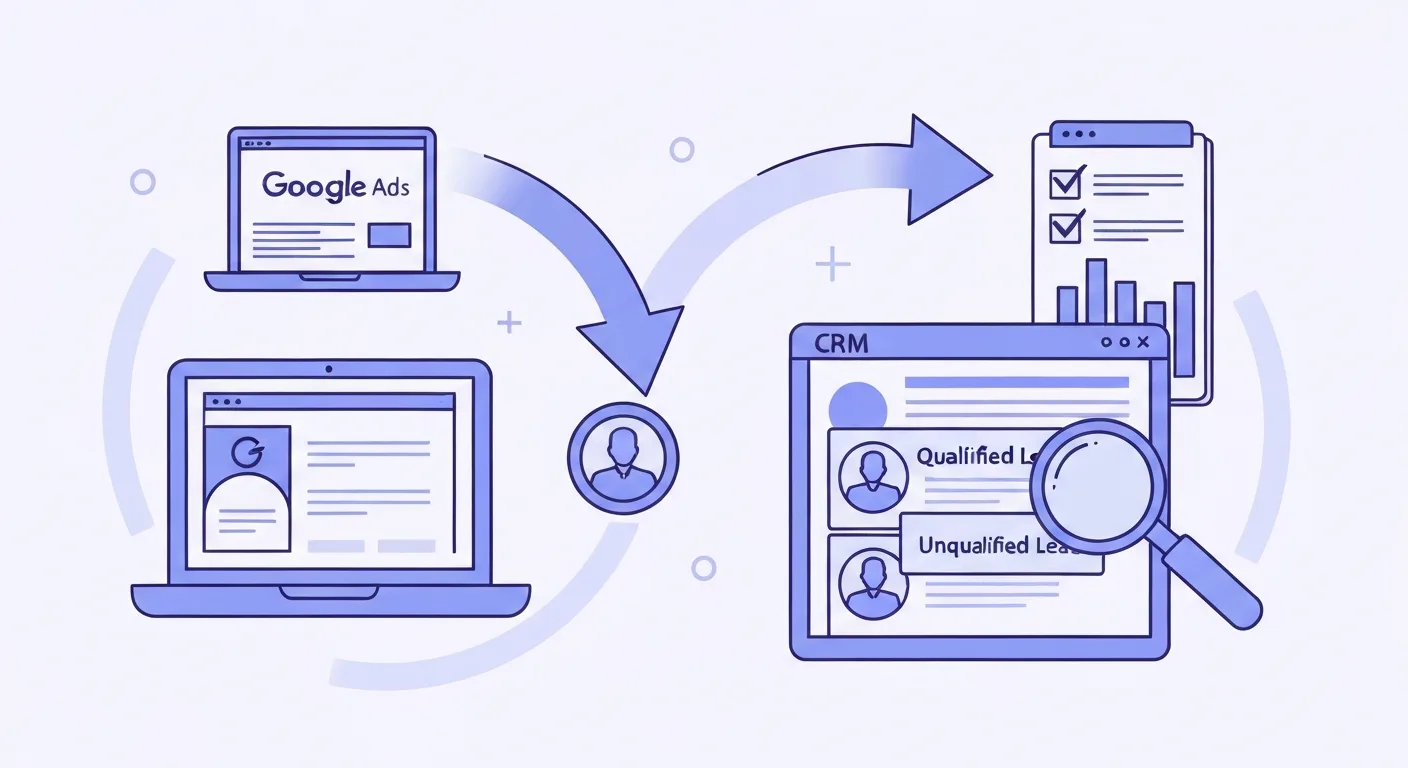
How to Get Google Ads to Send You Qualified Clients, Not Junk Leads
Professional services firms in NZ pay top dollar for Google Ads clicks. Here's the quality signal loop that makes Google AI find clients, not form-fill junk.
Written by

Founder & Lead Generation Specialist
Jason Poonia is the founder of Lucid Leads, helping service businesses across New Zealand generate qualified leads through paid advertising and conversion-focused funnels. With a background in Computer Science from the University of Auckland and over 5 years of experience running lead generation campaigns, Jason has helped businesses in construction, trades, real estate, and professional services generate thousands of qualified leads. His data-driven approach combines targeted ad strategies with rapid lead qualification to deliver prospects who are ready to buy.